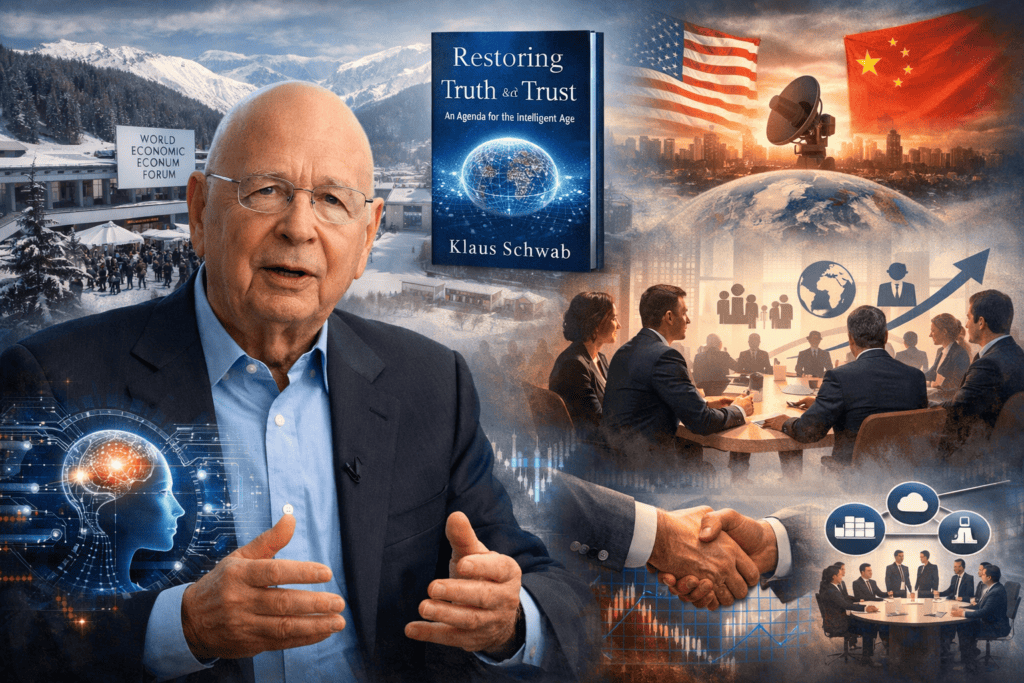
Klaus Schwab on Restoring Truth and Trust in the Intelligent Age
In a wide-ranging interview, Klaus Schwab, founder of the World Economic Forum, reflects on the growing crisis of trust in institutions, politics, and business—and why restoring it is essential as humanity enters what he calls the “intelligent age.” The conversation centers on his new book, Restoring Truth and Trust: An Agenda for the Intelligent Age, which argues that truth, trust, and long-term thinking are the foundations for navigating rapid technological change.
A World Losing Its Sense of Truth and Trust

Schwab warns that truth and trust are eroding globally. He traces this decline to the loss of a shared narrative focused on future generations. Societies, he argues, have become increasingly present-focused and individualistic, prioritizing short-term gains over long-term responsibility. Without a common understanding of facts and values, meaningful dialogue and collective action become far more difficult.
How the World Economic Forum Has Evolved
Since its founding in 1971, the World Economic Forum has transformed alongside the global economy. Schwab explains that the world today is far more interconnected and complex than it was five decades ago. Global challenges—ranging from climate change to artificial intelligence—cannot be solved by governments, businesses, or civil society acting alone. This reality, he says, makes public-private cooperation more critical than ever.
Stakeholder Capitalism vs. Short-Termism
A major theme of the interview is the tension between stakeholder capitalism and short-term corporate behavior. Schwab criticizes the growing emphasis on rapid AI deployment, stock buybacks, and cost-cutting at the expense of long-term value creation. While he acknowledges the pressure companies face, he remains confident that stakeholder capitalism will ultimately prevail. Trust, he argues, is essential for attracting talent, maintaining customer loyalty, and sustaining growth.
Polarization and the Need for Dialogue
Schwab also addresses political polarization in the United States and Europe. He stresses that productive dialogue must begin with a willingness to examine facts and establish a shared sense of truth. Only then, he believes, can societies engage in constructive conversations and find durable solutions to deeply rooted problems.
Why Davos Matters
Explaining the choice of Davos as the Forum’s annual meeting place, Schwab highlights its “global village” atmosphere. The setting encourages informal interaction, openness, and engagement among leaders from governments, business, academia, and civil society—an environment designed to foster trust and collaboration across sectors.
Global Power Shifts and the AI Race
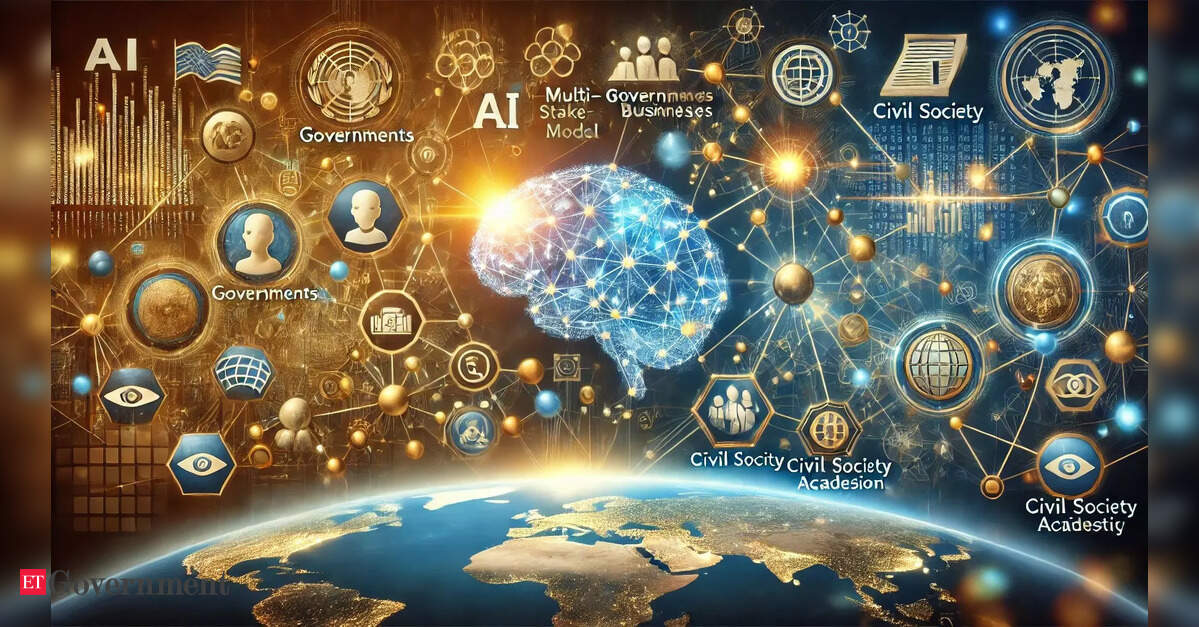
On geopolitics, Schwab reflects on the United States’ continued prominence and the intensifying competition with China, particularly in decisive technologies like artificial intelligence. He sees Europe as a potential bridge-builder but notes that it must strengthen its own technological and economic position to remain relevant in a rapidly changing global order.
Preparing for the Intelligent Age
In his personal reflections, Schwab explains why he is stepping back from day-to-day leadership at the World Economic Forum to focus on intellectual work. He emphasizes that the transition from the industrial age to the intelligent age—driven by AI and advanced technologies—is happening faster than many realize. His goal, through writing and thought leadership, is to help societies prepare for this shift with foresight, ethics, and responsibility.
The Bottom Line
Schwab’s message is clear: technology alone will not define the future. Without restoring truth, trust, and a long-term perspective, the intelligent age risks deepening divisions rather than solving global challenges. His call is not just for smarter systems—but for wiser leadership in a world transformed by AI.