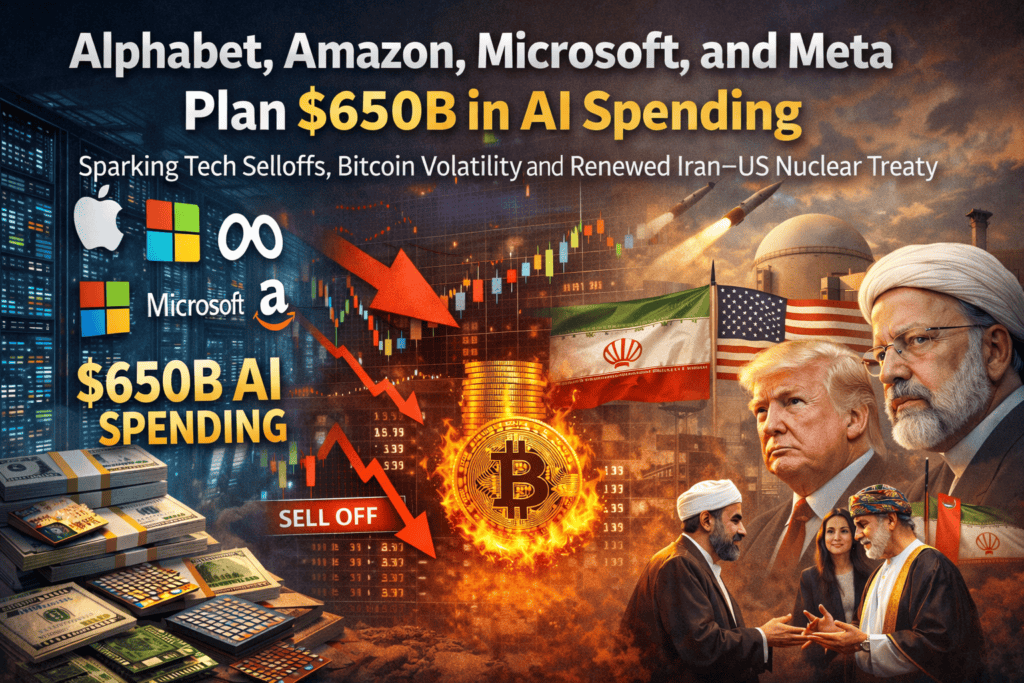
Alphabet, Amazon, Microsoft, and Meta plan $650B in AI spending, sparking tech selloffs, Bitcoin volatility, and renewed Iran–US and nuclear treaty tensions.
Big Tech Bets Billions on AI as Markets Wobble and Geopolitics Heat Up
A Bloomberg News Now report highlights a powerful mix of market-moving forces—from historic AI spending by America’s biggest tech firms to volatility in crypto and renewed geopolitical tensions involving Iran, the US, and Russia.
Big Tech’s $650 Billion AI Spending Surge
Four major US technology giants—Alphabet, Meta Platforms, Microsoft, and Amazon—are planning a combined $650 billion in capital expenditures this year, largely driven by artificial intelligence.
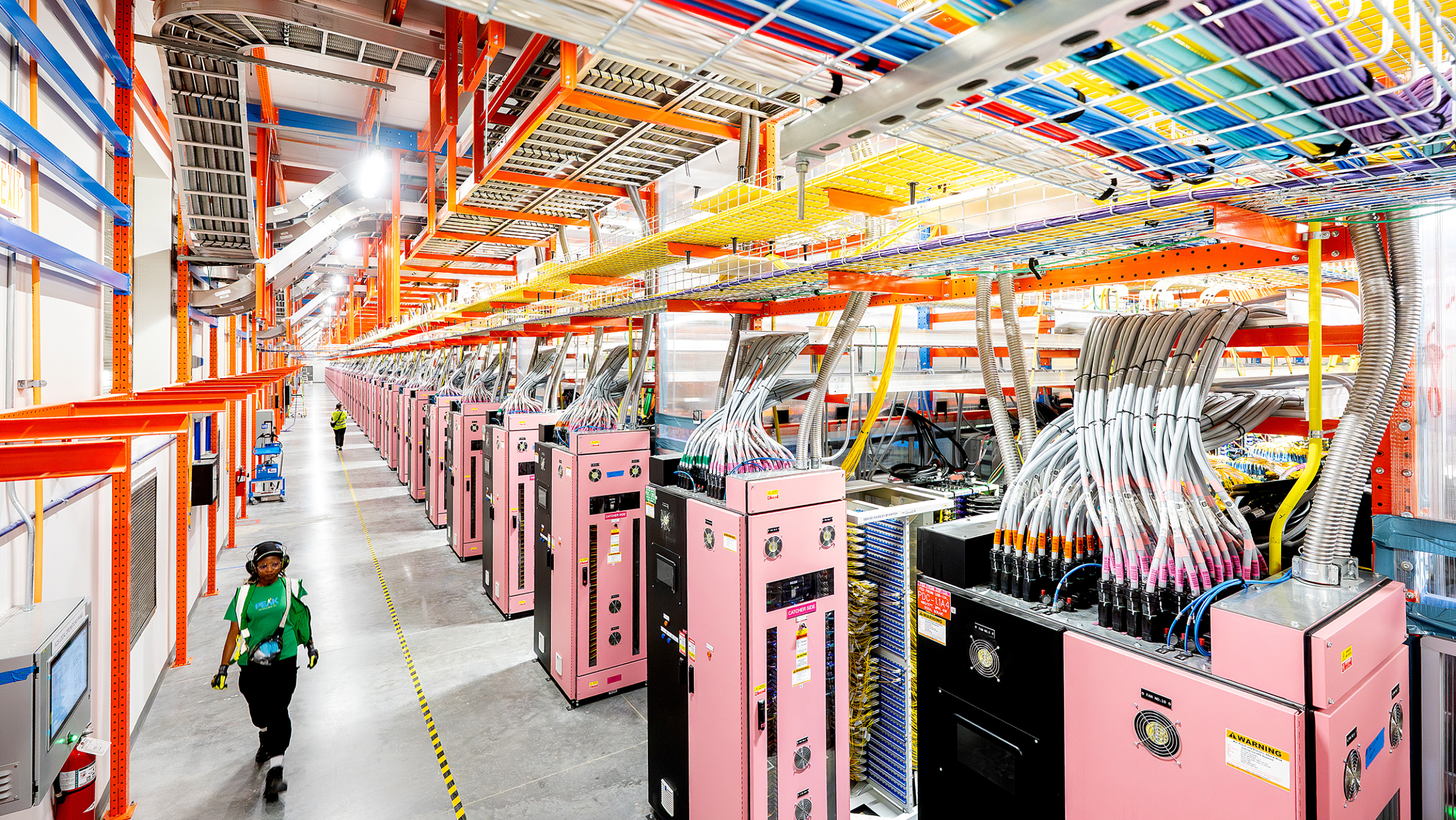
Amazon drew particular attention after revealing plans to invest $200 billion in AI-focused infrastructure, including data centers, chips, and advanced equipment. The announcement triggered an 8% drop in Amazon shares, reflecting investor anxiety over near-term costs.
CEO Andy Jassy defended the strategy, saying the spending—mainly aimed at Amazon Web Services and AI workloads—will be “worth it” over the long run. Bloomberg Intelligence analyst Poonam Goyal echoed that view, noting Amazon must invest aggressively in cloud and AI to stay competitive. Some of this capital will also support satellite and connectivity projects designed to challenge SpaceX’s Starlink network.
Markets React: Tech Selloff and Crypto Volatility
The massive AI investment cycle has unsettled markets. The S&P 500 is heading toward its worst week since April, while the tech-heavy NASDAQ Composite is now down 3% year-to-date.
Risk aversion also spilled into crypto markets. Bitcoin initially slid as sentiment weakened, with Nobel laureate Paul Krugman describing a potential “crisis of faith” in cryptocurrencies. Investors pulled $434 million from US Bitcoin ETFs in a single week. Still, Bitcoin staged a rebound, climbing 4% to nearly $66,000, underscoring how fast sentiment can shift in digital assets.
Geopolitics: Iran Talks and a New Nuclear Treaty Push
Beyond markets, geopolitics took center stage. Oman mediated indirect talks between Iran and the United States over Tehran’s nuclear program. Rebecca Wasser cautioned against excessive optimism, pointing to rising regional firepower and what she described as Iran’s risky behavior.
Meanwhile, Donald Trump called for a new nuclear arms treaty with Russia, aimed at replacing the expiring New START agreement—the last major arms control pact between Washington and Moscow. Former Republican congressman Patrick McHenry supported the idea, stressing that foreign policy issues are deeply interconnected and increasingly urgent.
The Bigger Picture
From trillion-dollar AI ambitions to fragile market confidence and renewed nuclear diplomacy, the global outlook remains complex. Investors are weighing long-term technological transformation against short-term volatility, while policymakers navigate an increasingly tense geopolitical landscape. One thing is clear: decisions made now—in boardrooms and diplomatic backchannels—will shape markets and global stability for years to come.