Confused about U.S. government loans, grants, and benefits? Learn the key differences, who qualifies, how to apply, and how to avoid “free money” scams—updated for 2026.
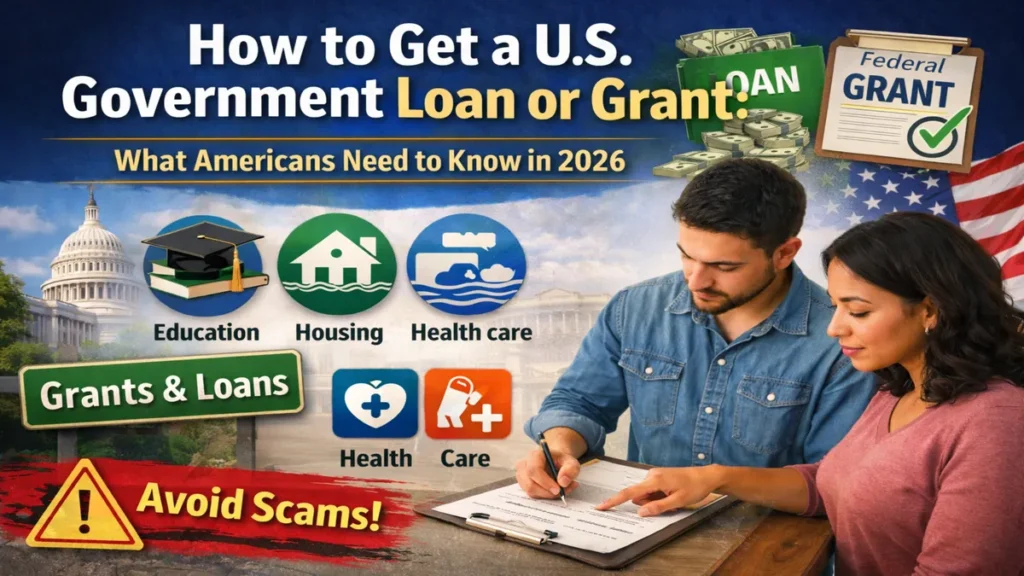
Navigating government financial help can feel overwhelming—but understanding the difference between government loans, federal grants, and benefits can save you time, money, and stress. Here’s a clear, up-to-date guide based on official U.S. government information to help Americans find legitimate funding and avoid scams.
Government Loans, Grants, and Benefits: What’s the Difference?
Not all government financial help works the same way. Knowing the distinction is critical before you apply.
Government Loans
A government loan is money you borrow from the federal government and must repay with interest. These loans are designed to support major life and economic needs, including:
- Paying for college or vocational education
- Buying or repairing a home
- Starting or expanding a small business
Government loans typically offer lower interest rates and better terms than private lenders, making them a popular option for students, homeowners, and entrepreneurs.
Federal Government Grants
Unlike loans, federal grants usually do not require repayment—but they are not meant for personal expenses.
Grants are generally awarded to organizations involved in public or government-funded work, such as:
- Universities and colleges
- Research institutions
- Nonprofit organizations
- State and local governments
- Law enforcement agencies
- Eligible businesses
Organizations can search for federal grant opportunities through Grants.gov, or by contacting their state or territory for local funding programs.
Government Benefits
Government benefits help individuals and families cover essential needs like:
- Food assistance
- Health care
- Housing support
- Disaster relief
Unlike loans, benefits usually don’t need to be repaid, but each program has its own eligibility rules and deadlines. The official USAGov Benefit Finder can help you check what programs you may qualify for.
Types of Federal Loans for Individuals
The federal government offers loan programs tailored to specific needs, including:
- Small business funding for entrepreneurs
- Home loans and home repair loans
- Student loans for higher education
- Disaster recovery loans for individuals and businesses
- Agricultural loans for farmers and ranchers
Each program has different requirements, so it’s important to review details carefully before applying.
How to Apply for a Government Loan
While every program is different, most applications follow a similar process:
- Review eligibility requirements, deadlines, and terms
- Complete the required application forms
- Provide documentation, such as proof of income, identification, and the purpose of the loan
- Ask for help if needed—official government resources are free
Never pay anyone to “speed up” or “guarantee” approval.
Watch Out for “Free Money” Scams
Scammers often pose as government agencies offering “guaranteed grants” or “free money.” Be cautious if someone:
- Asks for payment to access a grant or loan
- Requests sensitive personal information upfront
- Claims approval is guaranteed
Legitimate programs from US General Services Administration and other federal agencies do not charge fees to apply. When in doubt, verify information directly through official government websites.
Bottom Line
Government loans, grants, and benefits can provide real financial relief—but only if you understand how they work and apply through trusted sources. Always rely on official platforms, review eligibility carefully, and stay alert to scams.
Last updated: November 13, 2025
Yo, download the 6gbetapp. Makes things way easier. My go-to spot: 6gbetapp
881betcom, that’s the name! Been rocking with it for a while now. Give it a try: 881betcom
A888bet? Yeah, I mess with that. Plenty of options, you know? Worth checking out: a888bet
Yo, check out luk88, you might be surprised! It has some cool vibes and I’m interested to experience this more. Check em’ out luk88
Scoping out the Playtime app APK. Gotta make sure it’s safe before installing! Stay safe and happy app-ing: playtime app apk
luk88.vn? Oh man, that takes me back! Great place to chill and play, tons of cool stuff going on. Definitely worth checking out if you’re new to the scene! Find it at luk88.vn
[8355]jangkrik4d | Login Resmi Link Alternatif Situs Slot Gacor Hari Ini,jangkrik4d menyediakan akses login resmi dan link alternatif terbaru. Daftar casino online terpercaya dengan kemudahan deposit via dana. Gabung sekarang juga! visit: jangkrik4d