Coca-Cola topped earnings expectations but warned on 2026 sales growth. Coke Zero gains, resilient high-income consumers, and a widening K-shaped economy are in focus.
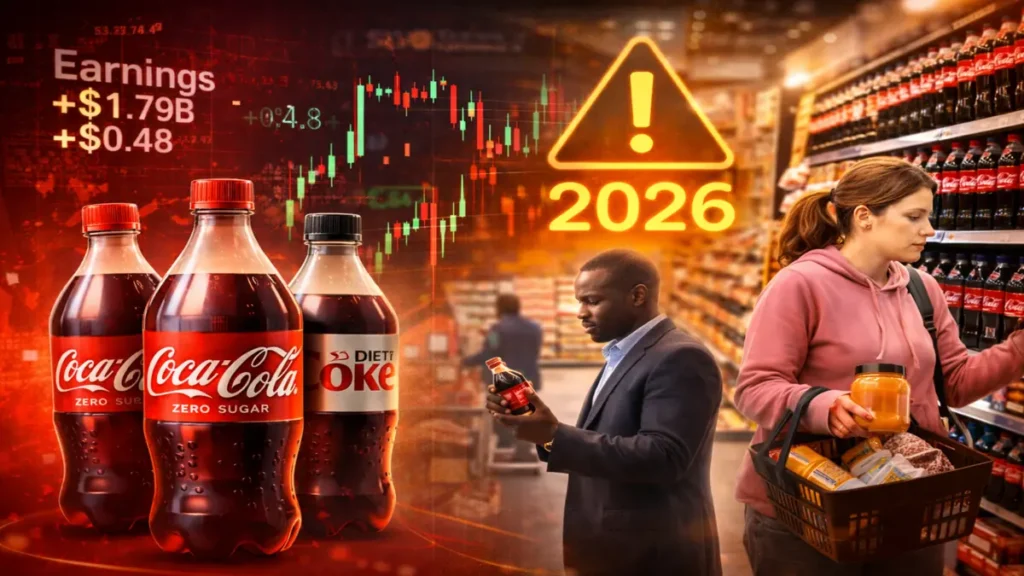
Earnings Beat, But Outlook Disappoints
Coca-Cola managed to edge past Wall Street profit estimates, supported by pricing actions and brand strength. However, management’s outlook for 2026 sales growth came in below expectations, tempering investor enthusiasm.
Executives pointed to ongoing macro uncertainty, particularly among lower-income consumers, as a headwind for volume growth despite the company’s global scale and pricing power.
U.S. Volume Growth Shows Consumer Resilience
One bright spot was the U.S. market, where Coca-Cola reported 1% volume growth despite multiple rounds of price increases.
That performance surprised some analysts and suggests that brand loyalty remains strong, especially among higher-income households.
Brian Sozzi, Yahoo Finance’s executive editor, noted that staples like Coca-Cola are holding up better than many discretionary categories, even as overall retail demand cools.
Zero-Sugar Brands Drive Momentum
Coca-Cola highlighted strong demand for zero-sugar and functional beverages, with Coke Zero, Diet Coke, and Core Power leading growth.
The trend reflects shifting consumer preferences toward lower-sugar options without sacrificing familiar brands—a strategy that has helped Coca-Cola protect volumes while raising prices.
A Clear K-Shaped Consumer Economy
The results also reinforced signs of a K-shaped economy:
- Higher-income consumers continue to spend on branded goods like Coca-Cola, absorbing price hikes with little resistance.
- Lower-income consumers, by contrast, are increasingly trading down, seeking value at dollar stores and discount retailers.
This divergence helps explain why Coca-Cola can grow volumes in premium and zero-sugar categories while still facing pressure in value-focused channels.
What Coca-Cola Signals for the Broader Market
As one of the world’s largest consumer staples companies, Coca-Cola is often viewed as a proxy for everyday spending trends.
Its mixed outlook suggests that while consumers are not pulling back sharply, spending growth is becoming more selective—favoring trusted brands and perceived value over discretionary purchases.
For investors, the takeaway is nuanced: Coca-Cola’s brand strength remains intact, but future growth may depend more on product mix and pricing discipline than broad-based volume expansion.
Why This Matters
Coca-Cola’s earnings highlight a U.S. consumer that is resilient but uneven, with income disparities shaping what people buy—and where. As inflation lingers, even defensive giants like Coca-Cola are navigating a more complex demand landscape heading into 2026.
Just checked out 87aapp, and I’m impressed with the variety of options. Looks like a solid place to try your luck! Head over to: 87aapp
Phlagologin seems like a simple login point. Gets you straight where you need to be. Quick login: phlagologin
Hey guys! Just tried out plus7776 and I gotta say, it’s pretty solid. Easy to use and seems legit. Check it out for yourselves! plus7776
Found this place through a friend and I am honestly blown away. The game selection is huge and I love how they keep adding new slots. Cashouts always land in my account within hours. It feels like a genuine community rather than just a cold website. Will definitely keep coming back. idjepangbet
I stumbled upon this website by accident and now I am never leaving. The login process is lightning fast and the slot selection covers everything from vintage fruit machines to modern video slots. Customer service actually cares about player feedback which is rare these days. Just try okeplay777login and trust me you will be hooked. okeplay777login
My group has been running our weekly football pools here and the payout structure is fair and straightforward. We can use all the regional e wallets we rely on and balances update instantly after a winning slip. Clean design makes finding my history super easy too. 118bet88bet