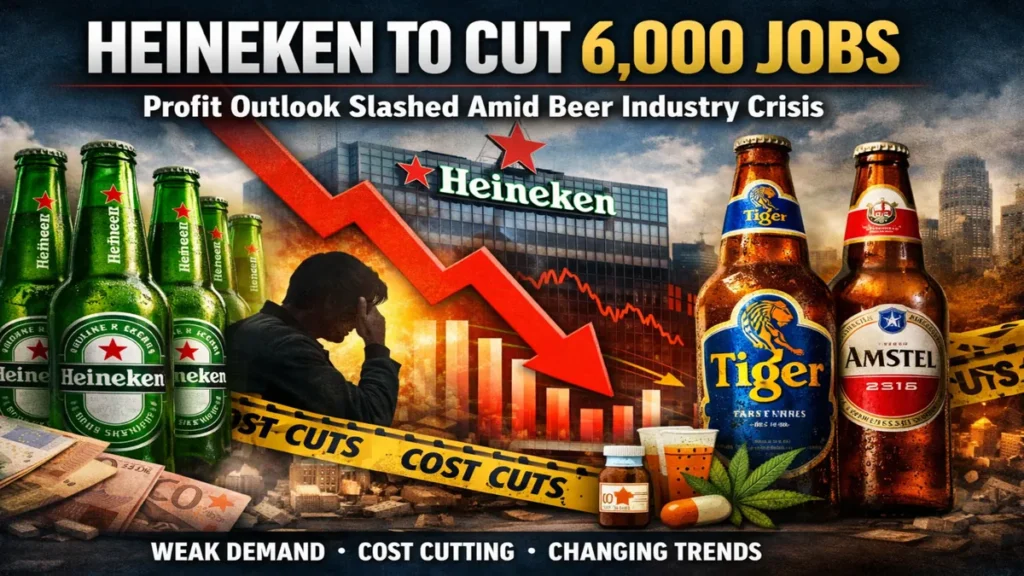
Amsterdam — Heineken said Wednesday it will cut up to 6,000 jobs, nearly 7% of its global workforce, as weak demand and mounting industry challenges weigh on performance. The announcement comes alongside a reduced profit growth forecast and leadership uncertainty at the world’s second-largest brewer by market value.
The restructuring is part of a broader effort to streamline operations and reassure investors concerned about efficiency and slowing sales across the global alcohol sector.
Profit Growth Guidance Trimmed
Heineken lowered its full-year operating profit growth outlook to 2%–6%, down from its earlier guidance of 4%–8%.
The downgrade reflects softer beer demand in key markets, pressured consumer spending, and operational headwinds. Analysts say brewers globally are grappling with:
- Rising input costs
- Slower consumption trends
- Weather-related disruptions in major regions
- Currency volatility in emerging markets
The company said it aims to achieve “higher growth with fewer resources,” signaling a renewed focus on cost discipline and margin improvement.
CEO Transition Adds to Uncertainty
The restructuring plan comes as Heineken searches for a new chief executive following the resignation of Dolf van den Brink in January. Leadership transitions at a time of operational pressure often increase investor scrutiny, particularly for global consumer brands navigating structural change.
Heineken’s portfolio includes internationally recognized brands such as Tiger Beer and Amstel, alongside its flagship Heineken lager.
Industry-Wide Pressures
The entire alcohol sector is facing mounting challenges:
1. Strained Consumer Finances
Higher living costs have curbed discretionary spending in several markets, affecting beer and spirits sales volumes.
2. Changing Drinking Habits
Consumers are increasingly opting for:
- Low- and no-alcohol alternatives
- Health-conscious beverages
- Premium but lower-volume consumption
3. Regulatory and Health Warnings
Governments worldwide are tightening labeling rules and increasing awareness campaigns around alcohol consumption.
4. Competition from Alternatives
Growth in ready-to-drink beverages, cannabis markets (in some regions), and functional drinks is adding competitive pressure.
5. Impact of Weight-Loss Drugs
Industry executives have acknowledged that appetite-suppressing medications could gradually influence alcohol consumption patterns in certain demographics.
Cost-Cutting Trend Across Brewers
Heineken is not alone. Several global beer and spirits makers are:
- Reducing production volumes
- Selling non-core assets
- Scaling back expansion plans
- Implementing workforce reductions
Years of slow sales growth have forced companies to prioritize profitability over expansion.
What It Means for Investors
The job cuts signal a defensive pivot. While cost reductions may improve margins in the short term, investors will closely monitor:
- Volume recovery in emerging markets
- Pricing power amid inflation
- Leadership stability under the incoming CEO
- Long-term demand trends in developed economies
Heineken’s ability to adapt to shifting consumer preferences while maintaining brand strength will be key to restoring momentum.
[8153]olxtoto Official Login | Trusted Online Slots & Fast Payouts MY,olxtoto provides a secure platform for the best online slots in Malaysia. Get the official apk download for easy access and enjoy the fastest payouts. Join now! visit: olxtoto
Just what I was looking for in a gaming site. Simple registration and the luck seems to be on my side here. Big thumbs up for 777asgame.
Finally found a reliable place to play. The login process at 96xbajeelogin is quick and I never have any issues accessing my account.