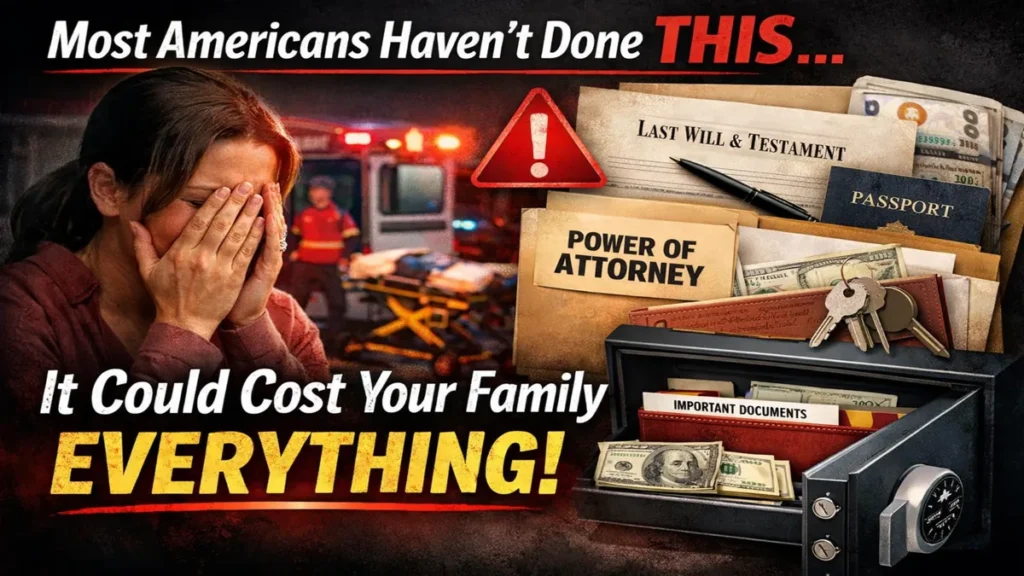
A sudden accident. A medical emergency. A travel delay.In moments like these, families often discover something shocking: there are no instructions, no access, and no legal authority to act.
According to Certified Financial Planner Karen Melo Ticas of Planning For Good, avoiding emergency document planning is one of the biggest — and most expensive — mistakes people make.
Why?
Because fear, confusion, or discomfort keeps many from preparing the documents that protect their money, health decisions, and loved ones.
And in a crisis, it’s already too late.
The Documents That Matter Most in an Emergency
Identification & Property Records
Without these, families struggle to access accounts or prove ownership.
- Driver’s license & passport copies
- Home deeds & property titles
- Insurance documents
- Bank account details
Pro Tip: Travel with copies — never originals.
A Contact List That Could Save Hours (or Days)
If you’re unconscious or unreachable, who knows:
- Your doctor?
- Your employer?
- Your CPA?
- Your financial advisor?
A simple emergency contact list can prevent panic and costly delays.
The 4 Legal Documents Many People Get Wrong
Will (But Don’t Rely on It Alone)
A will handles leftover instructions — but it usually goes through probate, making details public. It should not be your only planning tool.
Power of Attorney (POA)
This allows someone to manage your finances if you cannot.
Important: Banks sometimes reject outdated POAs. Review every few years.
Healthcare Proxy
Without one, doctors may not legally share medical information with loved ones.
Beneficiary Designations (The #1 Costly Mistake)
This is where families lose money unintentionally.
Accounts like:
- 401(k)s
- IRAs
- Investment accounts
Override your will.
If your beneficiaries are outdated, assets could go to an ex-spouse or unintended recipient — even if your will says otherwise.
Always:
- Name primary and contingent beneficiaries
- Avoid naming minors directly
- Review after major life events
Where Should You Store Everything?
You need both:
Physical protection
- Fireproof home safe
- Organized estate binder
Digital protection
- Secure encrypted cloud storage
- Shared access instructions with a trusted person
Never rely on just one storage method.
Why Planning Is Especially Urgent for LGBTQ+ Families
While the documents are the same, enforcement can vary across states.
Without updated:
- Power of attorney
- Healthcare proxy
- Marriage documentation
There’s a risk relationships may not be respected in certain jurisdictions.
Traveling? Moving states?
Review everything before you go.
The 3 Things You Should Do Today
- Create a detailed emergency contact list.
- Update beneficiaries on all financial accounts.
- Gather tax records, insurance policies, mortgage details, and estate documents in one place.
These steps take hours — but can prevent years of legal headaches.
The Hard Truth
Emergency planning isn’t about expecting tragedy.
It’s about protecting your family from chaos.
As Karen Melo Ticas explains, these documents are just as important for disability, illness, or unexpected delays as they are for end-of-life planning.
Waiting doesn’t reduce risk.
It only increases stress for the people you love most.
Great experience so far. The customer support is actually helpful and the games are very fair. Give krwin24 a try, you won’t regret it.
Yo, had a decent run on okebet3. Not gonna lie, I was sweatin’ a bit there, but pulled through in the end. Good selection of games, and the payouts seem fair enough. Give it a go and see what you think! okebet3