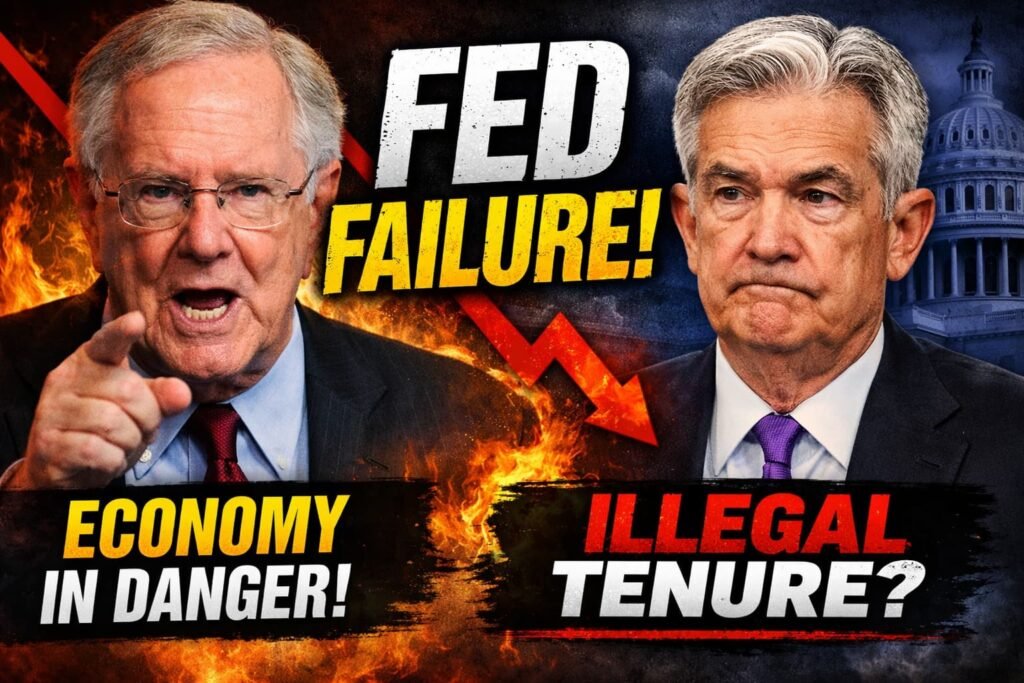
Steve Forbes delivers a sharp critique of Jerome Powell and the current direction of U.S. monetary policy. His message is clear: the Federal Reserve may be making a dangerous mistake by focusing on past inflation while ignoring present economic weakness.
👉 Watch the full video here:
https://youtu.be/Zta4GMUtcLg?si=POl4d4UFJ-UpXYV0
Is the Fed Fighting the Wrong Battle?
According to Forbes, the Federal Reserve is stuck in the past.
While inflation was once the primary concern, the economic landscape is shifting. Forbes argues that indicators like slowing payroll growth and weak GDP suggest a cooling economy—yet the Fed continues to maintain high interest rates.
His warning:
The Fed is “fighting yesterday’s inflation” instead of addressing today’s economic slowdown.
“Monetary Paralysis” Could Trigger Bigger Problems
One of Forbes’ strongest criticisms is what he calls “monetary paralysis.”
Despite clear signs of economic weakness:
- Falling payroll numbers
- Sluggish GDP growth
- Reduced economic momentum
The Fed has refused to cut interest rates.
Forbes believes this hesitation is dangerous. High interest rates increase borrowing costs, slow business expansion, and can push the economy closer to a downturn.
Legal Controversy: Can Powell Stay Beyond His Term?
A surprising part of the discussion centers on Powell’s tenure.
Jerome Powell reportedly suggested he could remain in office if a successor isn’t confirmed by the Senate. However, Forbes strongly disputes this claim.
👉 His argument:
- Powell’s term officially ends on May 15
- Staying beyond that without confirmation is not legally valid
This raises serious constitutional and governance questions about leadership at the Fed.
A New Direction? Kevin Walsh’s Potential Impact
Forbes expresses optimism about potential change, highlighting Kevin Walsh as a strong candidate to succeed Powell.
According to Forbes, Walsh could:
- Shift focus toward currency stability
- Reduce excessive economic intervention
- Restore confidence in the dollar
This represents a significant departure from current Fed strategies.
Why This Matters for the U.S. Economy
The debate isn’t just political—it directly affects:
- Interest rates on loans and mortgages
- Job creation and business growth
- Inflation and purchasing power
If Forbes is right, delayed action by the Fed could worsen economic conditions and increase the risk of a recession.
Final Thoughts
Steve Forbes presents a bold and controversial perspective: the Federal Reserve’s current approach may be out of sync with economic reality.
Whether you agree or not, one thing is certain—decisions made by Jerome Powell and the Federal Reserve will have lasting effects on the global economy.
Need some solid dự đoán xsmn hôm nay minh ngọc suggestions before I place my bets. Any reliable sites or strategies you guys swear by? dự đoán xsmn hôm nay minh ngọc
Alright boys, I’m gonna play with slot 92 today, I’m feeling like i will win today. What about u? wanna play together in this awesome casino? Let’s goooo! slot 92
Gonna snag the 4rabet apk and see what the hype is about. Hope it’s easy to install and gets me straight into the action. Good luck to me!
[1652]Casumo – Login Chính Thức | Tải App APK và Quay Hũ Uy Tín,Casumo mang đến trải nghiệm nạp tiền casino qua Momo nhanh chóng cùng các sảnh quay hũ nổ hũ uy tín. Khám phá cách chơi baccarat online dễ thắng và tham gia ngay hôm nay. visit: casumo
The login process is seamless and I never encounter any glitches. Everything just works perfectly on 24jiliparklogin.
Really impressed with the loyalty program here. The perks are awesome and the gaming experience is just buttery smooth. Join the club at 50jilivip.