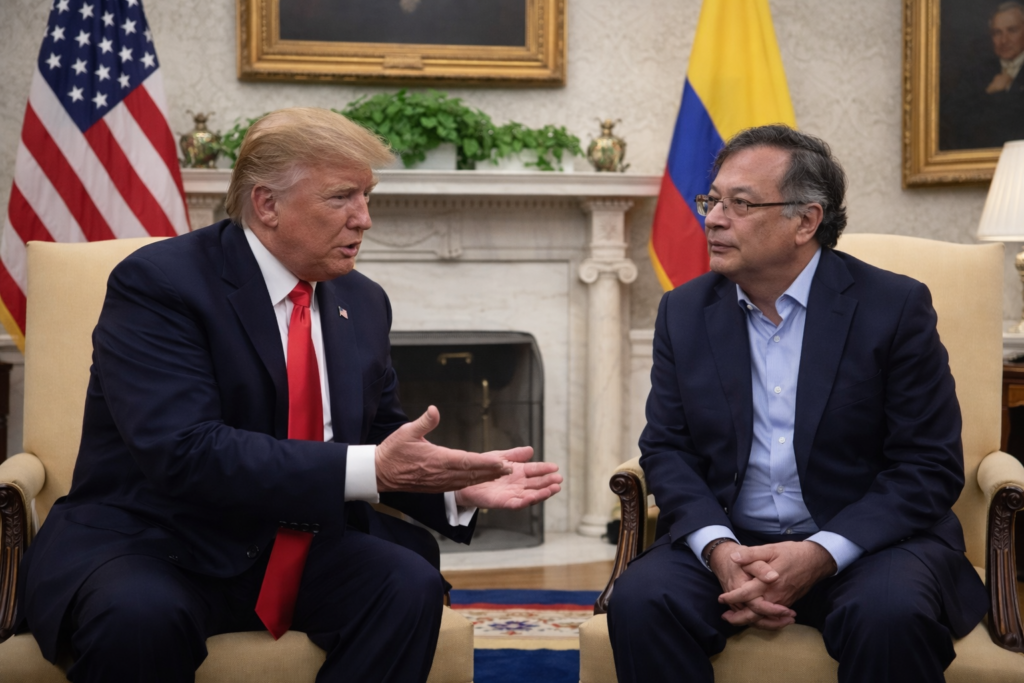
Trump and Colombia’s Petro Hold Closed-Door Talks at White House After Months of Tensions
After months of sharp rhetoric and public disagreements, Donald Trump and Colombian President Gustavo Petro met face-to-face at the White House for closed-door discussions aimed at easing diplomatic strains between the two nations.
The meeting marked a notable shift in tone following a period of hostility that included trading insults and ideological clashes between the two leaders. While expectations were cautious heading into the talks, both sides later described the encounter as unexpectedly positive.
A Surprisingly Cordial Meeting
Speaking after the meeting, President Trump struck an optimistic note, saying the two leaders “got along very well” despite their contrasting political views. The cordial atmosphere stood in contrast to earlier public exchanges that had suggested a deeply strained relationship.
According to officials familiar with the discussions, the meeting focused on rebuilding lines of communication rather than announcing major policy breakthroughs. The tone, however, suggested a willingness on both sides to reset relations and avoid further escalation.
Petro Emphasizes Shared Values
President Petro echoed Trump’s remarks, highlighting that the discussion was grounded in shared values of freedom, even though their ideological differences remain significant. Petro framed the meeting as a constructive dialogue rather than a confrontation, stressing that mutual respect guided the conversation.
Petro, a left-wing leader known for challenging traditional U.S. foreign policy approaches in Latin America, has often clashed with Trump rhetorically. His comments following the meeting suggested an effort to find common ground without compromising his political stance.
Sanctions Discussed, But No Announcements
One of the most closely watched aspects of the meeting was the issue of sanctions. Trump confirmed that his administration is working on sanctions-related matters, though he stopped short of announcing any concrete decisions or measures specifically targeting Colombia or its president.
Petro has repeatedly denied allegations linking him to the drug trade, calling such claims politically motivated. During the talks, no formal agreement or resolution on sanctions was disclosed, leaving uncertainty about how the issue may evolve in the coming weeks.
Analysts say the lack of immediate announcements may indicate that discussions are still in an exploratory phase rather than nearing a policy conclusion.
A Diplomatic Reset or Temporary Truce?
While the meeting did not produce headline-grabbing agreements, its significance lies in the shift from confrontation to dialogue. Diplomatic observers note that even a symbolic easing of tensions could help stabilize U.S.–Colombia relations, particularly at a time when regional security, migration, and counter-narcotics cooperation remain critical issues.
Still, challenges remain. Ideological differences, past accusations, and ongoing policy disputes could quickly resurface if progress stalls. The absence of concrete outcomes also leaves open the question of whether this meeting represents a lasting diplomatic reset or simply a temporary truce.
What Comes Next
Both leaders signaled openness to continued engagement, but the path forward remains uncertain. Any future developments on sanctions, trade, or security cooperation will likely determine whether this meeting leads to tangible improvements in bilateral relations.
For now, the closed-door talks have at least lowered the temperature between Washington and Bogotá—an outcome few would have predicted just months ago.
📺 Watch the full video here:
https://youtu.be/obGjtLrQGzI?si=gIGTEjPaEKUxmYf5