Artificial intelligence is no longer just a tech story — it’s a geopolitical, legal, and economic battleground.
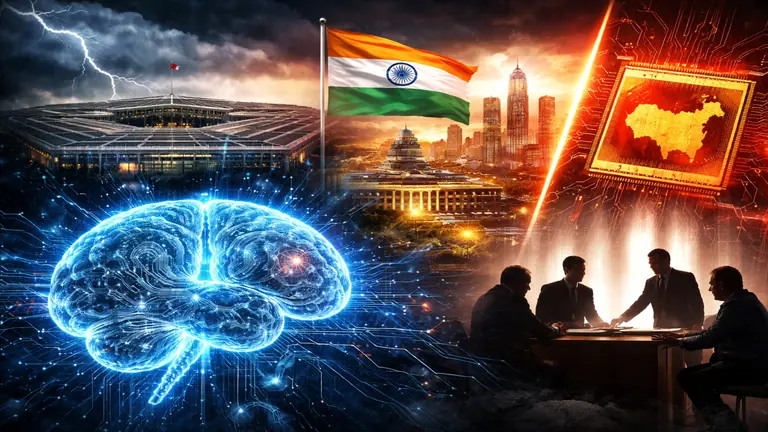
This week’s biggest AI developments span the Pentagon, China, India, Hollywood, and even Albania’s government. From military disputes to copyright threats and billion-dollar investment pledges, the global AI race is accelerating — and tensions are rising.
Here’s a breakdown of the biggest AI headlines you need to know.
Pentagon Frustrated With Anthropic Over Military AI Restrictions
The U.S. Department of Defense is reportedly growing frustrated with AI firm Anthropic over restrictions placed on how its models can be used.
Anthropic has limited military applications of its AI systems, particularly in areas related to:
- Weapons development
- Battlefield decision-making
- Combat operations
After months of negotiations, the Pentagon is now considering ending its relationship with the company.
This dispute highlights a larger debate in AI:
Should private AI firms restrict military use — or support national defense strategies?
As AI becomes more powerful, ethical boundaries between defense innovation and warfare automation are becoming increasingly complex.
ByteDance Faces IP Pressure Over AI Video Generator
ByteDance, the parent company of TikTok, announced it will address unauthorized intellectual property use on its new AI video generator, Seance 2.0.
The announcement follows legal threats from major U.S. studios — including Disney — which accused the company of using copyrighted characters without permission to train its AI models.
This adds to growing global tension around:
- AI training data transparency
- Copyright protection
- Studio vs. tech company disputes
As generative AI tools expand, legal frameworks are struggling to keep up with how models are trained and deployed.
India Signals $200 Billion AI Investment Surge
At the AI Impact Summit in India, Prime Minister Narendra Modi outlined ambitious plans to position India as a global AI leader.
Indian officials estimate more than $200 billion in AI-related investments could flow into the country over the next two years.
The investment is expected to span all five layers of the AI stack:
- Infrastructure
- Chips
- Cloud computing
- AI models
- Applications
India’s strategy signals a broader shift — AI leadership is no longer limited to the U.S. and China.
OpenAI Warns Lawmakers About China’s Deepseek
OpenAI reportedly warned U.S. lawmakers about Chinese AI startup Deepseek, alleging it has attempted to replicate U.S. AI models.
The concern centers around a technique known as distillation, where smaller AI models are trained by learning from outputs of larger, more advanced systems.
If proven, such practices could:
- Accelerate foreign AI development
- Undermine competitive advantages
- Intensify AI-related geopolitical tensions
The AI race between the U.S. and China is becoming increasingly tied to national security concerns.
Albanian Actress Sues Government Over AI Avatar
In one of the most unusual AI legal cases of the week, Albanian actress Anila Bisha is suing her government for $1 million.
She alleges that officials used her likeness without consent to create an AI-generated virtual minister named “Della.”
According to Bisha, she only approved the use of her image for a government website’s virtual assistant — not for broader political representation.
This lawsuit raises serious questions about:
- AI likeness rights
- Consent in digital replication
- Government accountability in AI deployment
As AI avatars become more common, image rights law may face a global reckoning.
The Bigger Picture: AI’s Power Struggle Is Expanding
This week’s headlines show AI is no longer just about innovation — it’s about power.
- Governments are negotiating control.
- Tech companies are battling copyright claims.
- Countries are competing for dominance.
- Individuals are fighting for digital rights.
Artificial intelligence is shaping the next era of economic growth, defense strategy, and legal reform.
And the world is still figuring out the rules.