An Arizona jury awarded $8.5 million to a sexual assault survivor, holding Uber vicariously liable for its driver’s actions. Legal experts say the ruling could impact ongoing cases nationwide.
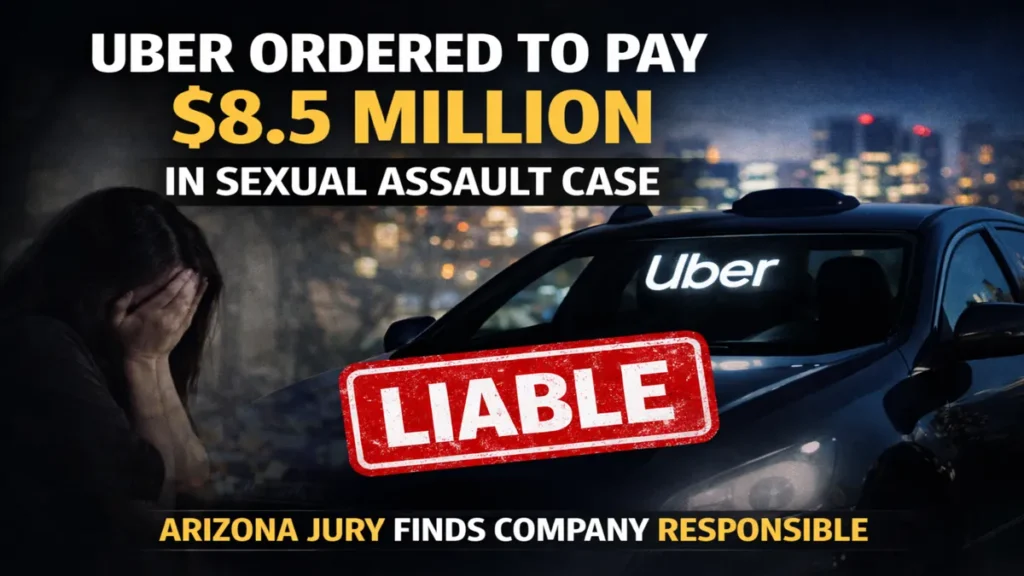
An Arizona jury has ordered Uber Technologies Inc. to pay $8.5 million to a passenger who was sexually assaulted by one of its drivers, marking a significant development in ongoing litigation involving the ride-hailing giant.
The verdict found Uber vicariously liable under Arizona law, meaning the company was held legally responsible for the actions of its driver, even though drivers are classified as independent contractors.
However, the jury did not find Uber negligent in its company-wide safety policies.
Why the Verdict Is Significant
Legal analysts say the ruling stands out for several reasons:
- It applies a specific Arizona doctrine that expands employer liability.
- It differs from the outcome of a similar case in California.
- It may influence dozens of pending sexual assault lawsuits against Uber across the country.
The case is being viewed as a potential “bellwether trial,” meaning it could signal how future juries approach similar claims.
Vicarious Liability and the Gig Economy
The verdict adds to the ongoing legal debate about whether companies in the gig economy can be held responsible for the actions of independent contractors operating under their brand.
Courts nationwide have grappled with questions including:
- How much control companies exert over drivers
- Whether branding and platform control create employer-like relationships
- When companies should be held financially accountable for misconduct
The ruling could increase legal exposure for ride-sharing platforms and other gig-based companies if similar legal standards are adopted elsewhere.
Broader Legal Implications
The case also comes amid evolving legal standards. The American Law Institute recently updated its Restatement of Torts, potentially broadening when employers may be held responsible for sexual misconduct committed by individuals in positions of authority or control.
If courts apply this broader framework, companies could face increased liability in assault-related claims.
As appeals and additional trials proceed, the Arizona verdict may play a key role in shaping corporate accountability standards for the gig economy in the years ahead.