Ghislaine Maxwell refused to answer House lawmakers’ questions, citing the Fifth Amendment, as Congress moves to examine unredacted Epstein documents.
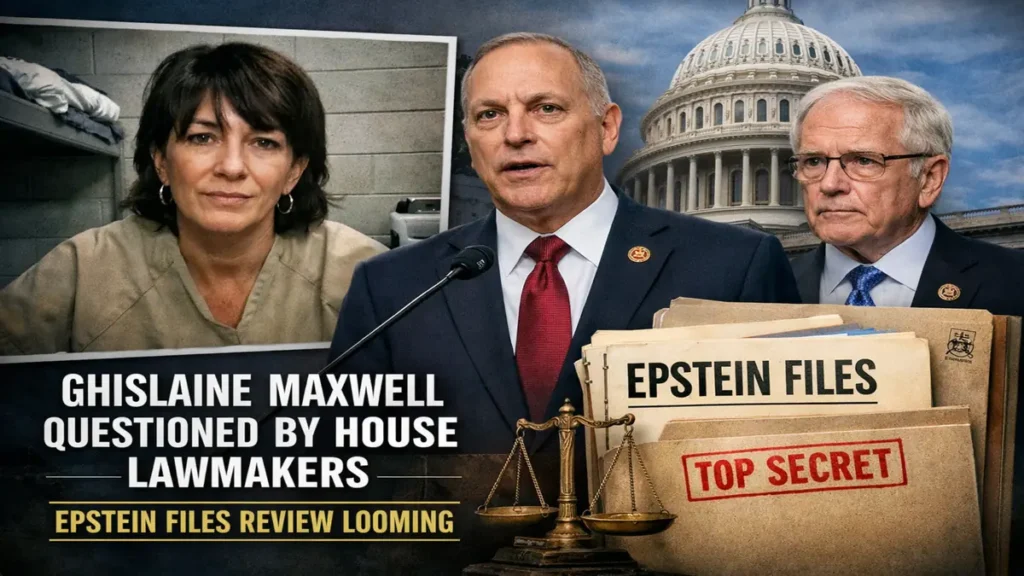
House lawmakers attempted to interview Ghislaine Maxwell, the former associate of Jeffrey Epstein, as part of an ongoing congressional effort to examine unresolved questions surrounding Epstein’s network and related government records.
The interview took place via video call from a federal prison camp in Texas, where Maxwell is serving her sentence. During the session, Maxwell invoked her Fifth Amendment rights and declined to answer lawmakers’ questions, limiting the amount of new information provided.
Fifth Amendment Invoked During Congressional Interview
According to participants, Maxwell refused to substantively engage with lawmakers, citing her constitutional right against self-incrimination. The decision effectively stalled efforts by the House to extract firsthand testimony directly tied to Epstein’s past activities and associates.
Despite her refusal to answer questions, lawmakers later shared differing interpretations of what was communicated during the call.
Republicans: No Allegations Against Trump or Clinton
Republican Representative Andy Biggs said Maxwell indicated that neither former President Donald Trump nor former President Bill Clinton were culpable for wrongdoing in connection with Epstein.
Biggs characterized this as an explicit statement from Maxwell, stressing that no accusations were leveled against either political figure during the exchange.
Democrats Question Maxwell’s Motive
Democratic lawmakers did not dispute that Maxwell made the statement, but they offered a different interpretation. They suggested her comments may have been strategic—possibly intended to signal to Donald Trump that she would testify publicly to his lack of involvement if granted clemency.
This interpretation highlights ongoing partisan disagreement over both Maxwell’s intent and the broader implications of her limited remarks.
Lawmakers Move to Review Unredacted Epstein Files
Following the interview, members of Congress announced plans to travel to the Department of Justice to review unredacted Epstein-related files. These documents are mandated for release under legislation passed last year, aimed at increasing transparency around the federal government’s handling of the Epstein case.
Lawmakers say the review could shed light on previously undisclosed details, even in the absence of direct testimony from Maxwell.
What Comes Next
While Maxwell’s refusal to testify limits immediate revelations, congressional scrutiny of Epstein-related records is intensifying. The release and review of unredacted files may play a critical role in addressing public questions that have persisted years after Epstein’s death.
As investigations continue, lawmakers from both parties say they will push for greater transparency to clarify who knew what—and when—about one of the most controversial criminal cases in recent U.S. history.