Opening your mail and seeing an IRS CP14 notice can trigger instant panic. But take a breath. A CP14 notice is one of the most common IRS letters, and in many cases, it’s straightforward to resolve—especially if you act early.
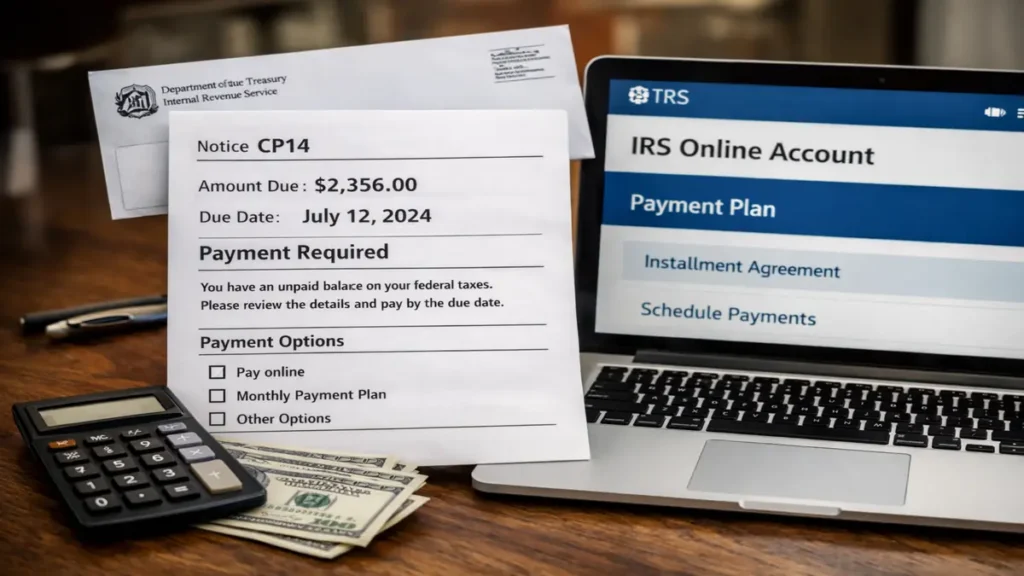
Here’s a clear, no-jargon guide to what a CP14 notice means, why you received it, and the smartest next steps to protect your money and peace of mind.
What Is a CP14 Notice?
A CP14 notice is sent by the Internal Revenue Service to inform you that you have an unpaid federal tax balance. It’s usually the first official notice the IRS sends when taxes remain unpaid after your return is processed.
This notice is not a lien, levy, or lawsuit. It’s a request for payment—or action.
Why Did the IRS Send You a CP14?
You may receive a CP14 notice if:
- You filed your tax return but didn’t pay the full amount due
- The IRS adjusted your return (math error, missing income, credits)
- A payment was delayed or didn’t post correctly
- Interest or penalties were added to an existing balance
⚠️ The IRS has acknowledged processing delays for some electronic payments, meaning a notice can arrive even if you recently paid.
What to Do Immediately (Don’t Skip This)
1. Read the Notice Carefully
Check:
- Tax year involved
- Total amount due
- Payment due date
Mistakes happen—don’t assume it’s correct without reviewing it.
2. Pay in Full If You Can
If you pay the full balance by the due date, you:
- Avoid additional interest
- Avoid late-payment penalties
- Close the issue immediately
This is the fastest, cleanest resolution.
3. Can’t Pay in Full? Set Up a Payment Plan
If paying everything at once isn’t possible, do not ignore the notice.
Options include:
- Monthly installment agreements
- Short-term payment extensions
- Temporary delay of collection (for hardship cases)
Applying early helps reduce penalties.
4. Disagree With the Amount? Act Fast
If you believe the CP14 is wrong:
- Call the IRS using the phone number on the notice
- Have your tax return, payments, and records ready
- Respond before the due date to avoid escalation
Ignoring a notice—even if it’s wrong—can make things worse.
Will You Be Charged Interest or Penalties?
Interest:
- ❌ No interest if you pay the full amount by the due date
- ✅ Interest accrues daily after the due date on unpaid balances
Penalties:
- Late payment penalties apply if the balance remains unpaid
- Penalties are smaller if you contact the IRS and arrange payment
What If You Live in a Disaster Area?
Taxpayers in federally declared disaster areas may qualify for:
- Extended payment deadlines
- Penalty relief
- Special collection protections
These rules change, so always verify current relief options if this applies to you.
Tools That Can Help You Right Now
- IRS Online Account – View your notice, balance, and payment options
- Payment Plan Application – Set up installments online
- Tax Withholding Estimator – Avoid future tax bills by adjusting withholding
Doing a quick “paycheck checkup” now can prevent another CP14 next year.
When to Get Extra Help
Consider additional help if:
- You can’t afford any payment right now
- You’re facing repeated IRS notices
- You believe penalties are unfair or incorrect
You may qualify for:
- Low Income Taxpayer Clinics
- Authorized representatives
- The Taxpayer Advocate Service (for unresolved issues)
The Biggest Mistake to Avoid
🚫 Ignoring the CP14 notice
Even if:
- You disagree with the amount
- You already paid
- You’re overwhelmed
Silence can lead to more penalties, interest, and stronger collection actions later.
Bottom Line
A CP14 notice is a warning—not a punishment.
Most cases are resolved easily by paying, setting up a plan, or clarifying an error.
The sooner you respond, the more control you keep.