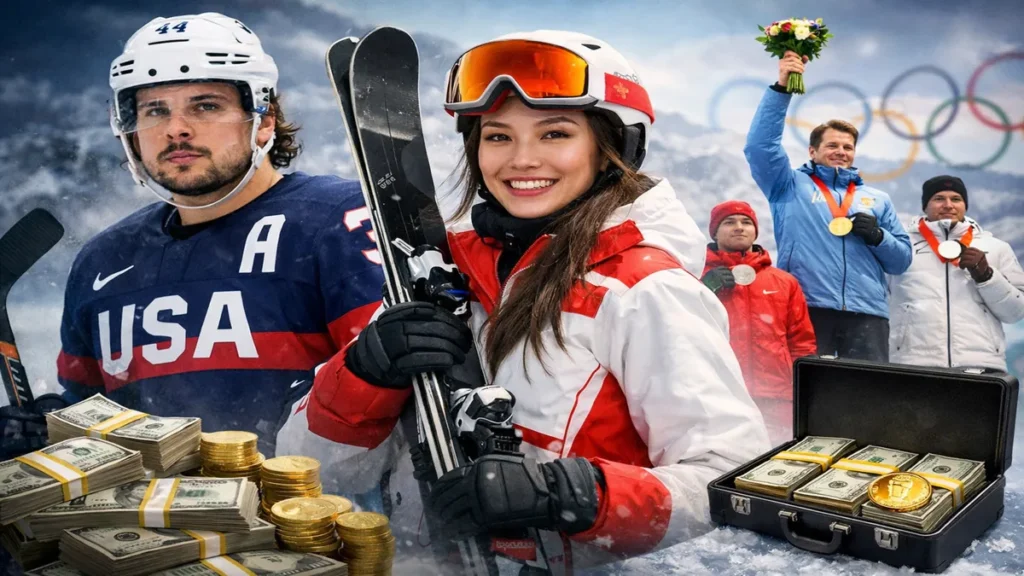
For most Olympians, the Winter Games are a labor of love—years of training funded by personal savings, sponsorship scraps, and national federation support. But at the 2026 Winter Olympics, a small, elite group arrives with financial security that rivals major professional sports stars.
A recent analysis highlights how endorsements, professional leagues, and national bonuses have reshaped the economics of Olympic competition—creating a sharp divide between the average athlete and the global superstars.
NHL Stars Are Back—and So Is Serious Money
One major shift for 2026 is the return of NHL players to Olympic competition for the first time since 2014. With the league allowing participation again, elite hockey players are bringing professional salaries into the Olympic arena.
The NHL’s minimum salary now stands at $775,000, meaning even role players earn more annually than most Winter Olympians will see across an entire career.
Austin Matthews: Hockey’s Olympic Powerhouse

Among the top earners is Austin Matthews, the Team USA forward and Toronto Maple Leafs superstar.
- 2025–26 NHL salary: Over $15 million
- Endorsements: Approximately $5 million
- Total annual earnings: Around $20 million
Matthews’ Olympic appearance isn’t about financial necessity—it’s about legacy. His income reflects how Olympic visibility now complements, rather than defines, an athlete’s earning power.
Eileen Gu: The Highest-Paid Olympian
The highest-paid athlete heading into the 2026 Winter Games is Eileen Gu, the American-born freestyle skier competing for China.
- Endorsements (last 12 months): ~$23 million
- Prize money: ~$100,000
- Primary income source: Brand partnerships, not competition winnings
Gu is a global marketing phenomenon. She holds multiple historic records, including being the youngest Olympic freestyle skiing champion and the first athlete to win three medals at a single Winter Games in her discipline.
Her endorsement portfolio is heavily China-focused, featuring major brands such as Anta, Mengniu, and Luckin Coffee, underscoring how market access can matter more than medals in modern Olympic economics.
Medal Bonuses: Still Meaningful—but Secondary
While endorsements dominate at the top, medal bonuses still provide meaningful income—especially for athletes without major sponsorships.
- United States (USOPC):
- Gold: $37,500
- Silver: $22,500
- Bronze: $15,000
- Italy:
- Medal bonuses range from $71,000 to $213,000, among the most generous in the world
For many competitors, these bonuses can exceed a full year’s training budget—but they pale in comparison to elite endorsement deals.
A Historic $200,000 Bonus for Every U.S. Athlete
In a landmark move, every U.S. Olympic and Paralympic athlete competing in 2026 will receive $200,000, regardless of performance.
This is made possible by a $100 million donation from Ross Stevens, founder and CEO of Stone Ridge. The initiative aims to address the long-standing financial strain faced by Olympic athletes—covering training, travel, coaching, and post-career stability.
The New Reality of Olympic Wealth
The 2026 Winter Olympics highlight a modern truth: Olympic success alone no longer determines financial success. Instead, global marketability, professional league participation, and brand alignment define who thrives financially.
For stars like Austin Matthews and Eileen Gu, the Olympics are a global stage—not a paycheck. For everyone else, new funding models and bonuses may finally offer a more sustainable path to compete at the highest level.