Pro-democracy media tycoon Jimmy Lai has been sentenced to 20 years in prison under China’s national security law, deepening concerns over press freedom in Hong Kong and escalating tensions with Western governments.
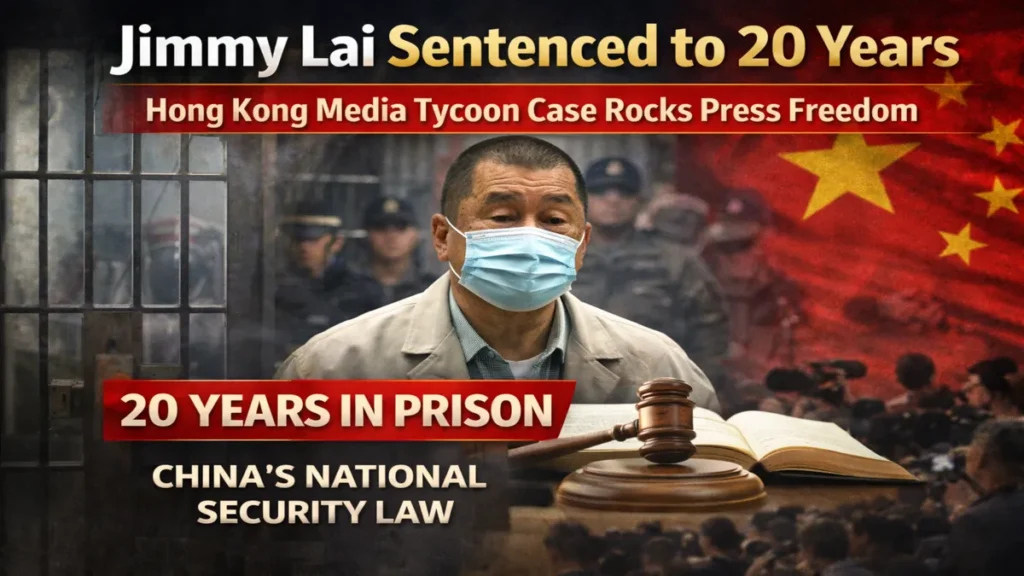
The sentencing of Jimmy Lai, a prominent pro-democracy figure and outspoken critic of Beijing, marks one of the most consequential cases to emerge from Hong Kong under China’s national security law.
Lai, 78, a former media tycoon and founder of the now-defunct Apple Daily, was handed a 20-year prison sentence, a punishment that underscores the sweeping reach of Beijing’s security framework and its tightening grip on dissent in the city.
A Landmark National Security Case
According to the court ruling, Lai was convicted of conspiring with others to call for foreign sanctions against Hong Kong and China, a charge that falls under the national security law imposed by Beijing in 2020.
While Lai avoided the maximum penalty of life imprisonment, the decision—delivered by government-vetted judges—still represents one of the harshest sentences imposed on a high-profile critic of the Chinese government since the law took effect.
Legal analysts say the verdict reinforces how broadly the national security law is being interpreted and applied, particularly against media figures and political activists.
Press Freedom Under Pressure
The case has reignited international concern over the erosion of press freedom in Hong Kong, once regarded as a bastion of free expression in Asia.
Apple Daily, long known for its outspoken reporting and criticism of Beijing, was forced to shut down in 2021 following police raids, arrests of senior editors, and the freezing of company assets. Press freedom groups argue that Lai’s sentencing sends a chilling message to journalists, publishers, and media owners operating in the city.
Wider Impact: Staff and Activists Also Jailed
Lai was not the only figure sentenced. Six former Apple Daily staff members and two pro-democracy activists received prison terms ranging from six years and three months to 10 years, highlighting the broader crackdown on individuals linked to the paper and Hong Kong’s democratic movement.
Human rights organizations say the collective sentencing illustrates how the law extends beyond political leaders to journalists and civil society figures.
International Fallout and Diplomatic Tensions
The ruling is expected to further strain relations between China and foreign governments, many of which have repeatedly criticized the national security law and called for Lai’s release.
Western officials and press freedom advocates argue that the case undermines Hong Kong’s autonomy and judicial independence, commitments that were central to the city’s handover from British rule in 1997.
Why This Case Matters
Jimmy Lai’s sentencing is more than a single court decision—it has become a global symbol of the shrinking space for dissent, independent journalism, and political opposition in Hong Kong. As Beijing continues to enforce the national security law, observers warn that similar cases could follow, reshaping the city’s media and political landscape for years to come.