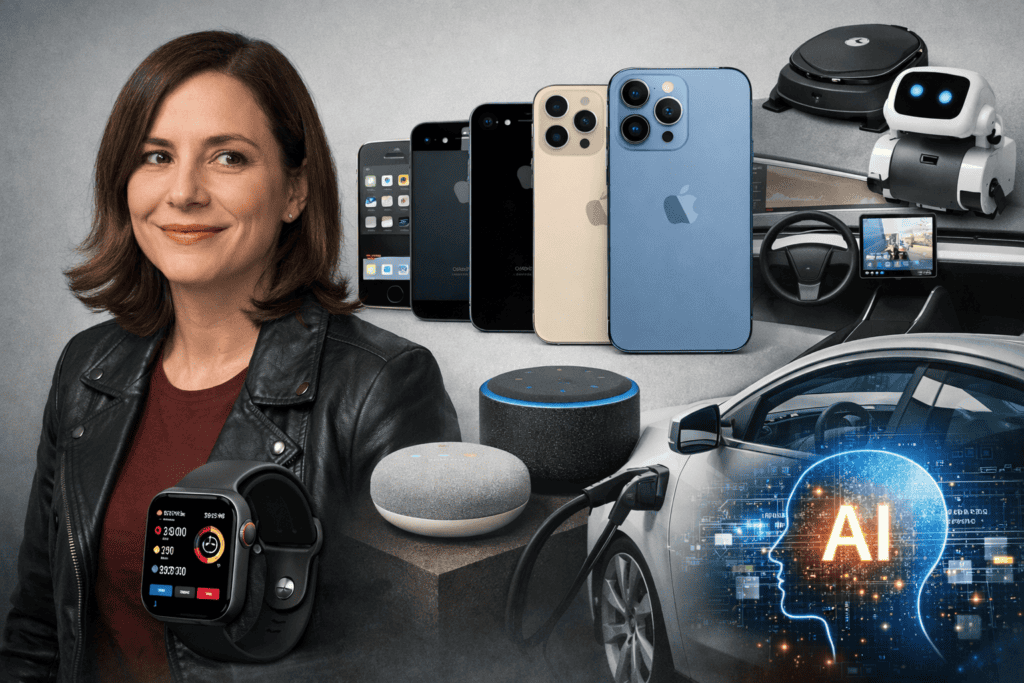
Joanna Stern, a longtime technology reporter at The Wall Street Journal, reflected on the most significant technology shifts she covered over the past 12 years in her final video for the publication, marking the end of a career that spanned one of the most transformative periods in consumer tech.
In the video, Stern highlighted 12 major developments that reshaped how people communicate, work, and interact with technology, ranging from the evolution of smartphones to the rapid rise of artificial intelligence.
Smartphones Redefined Everyday Life
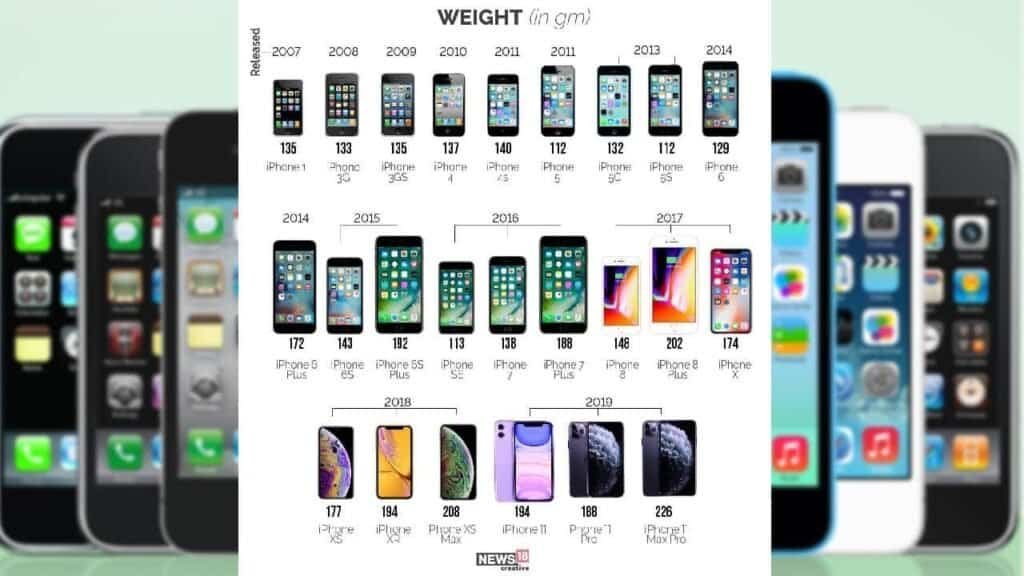
Stern pointed to the dramatic evolution of the iPhone as a defining symbol of the past decade. Early models were smaller and limited in capability, while newer versions—such as the iPhone 17 Pro—have grown into powerful, water-resistant devices capable of handling tasks once reserved for computers.
The smartphone’s rise also coincided with the decline of other once-dominant technologies. Stern noted the disappearance of BlackBerry devices and the gradual removal of the headphone jack, both of which reflected changing consumer priorities and design trade-offs.

New Ways to Communicate
Digital communication evolved alongside hardware. Emojis became a widely accepted form of expression, often replacing words entirely. Voice assistants, including Amazon’s Alexa and Google Assistant, entered homes and introduced hands-free interaction with technology, reshaping how users access information and manage daily tasks.
Wearables and Health Technology
The introduction of the Apple Watch marked a turning point for wearable devices. Initially viewed as optional accessories, smartwatches developed into health-focused tools capable of tracking fitness metrics, heart activity, and other health indicators. Stern described the Apple Watch as one of the most consequential product launches she covered.
The Reality Behind 5G
Stern also addressed the rollout of 5G wireless technology. While the transition was heavily marketed as transformative, she noted that its practical impact for most consumers resulted in modest speed improvements rather than a sweeping change in daily mobile use.
Virtual Reality and the Metaverse

The concept of the metaverse received significant attention in recent years, but Stern questioned its long-term impact. She suggested that virtual reality has remained a niche technology, falling short of predictions that it would replace real-world interaction on a mass scale.
Robots at Home and Cars as Computers
Developments in home robotics were another area Stern tracked, though she observed that many products struggled to find a clear, everyday purpose. Electric vehicles, by contrast, underwent a more pronounced transformation, evolving into highly software-driven machines often described as “computers on wheels.”
The Rise of Generative AI
Stern concluded by highlighting what she described as the most significant shift of her career: generative artificial intelligence. Tools such as OpenAI’s ChatGPT demonstrated the ability to write, converse, and create images in ways that closely resemble human output, signaling a new phase in how technology is developed and used.
As she signed off, Stern thanked viewers and readers for following her reporting over the years, closing a chapter that chronicled the rapid acceleration of modern technology.