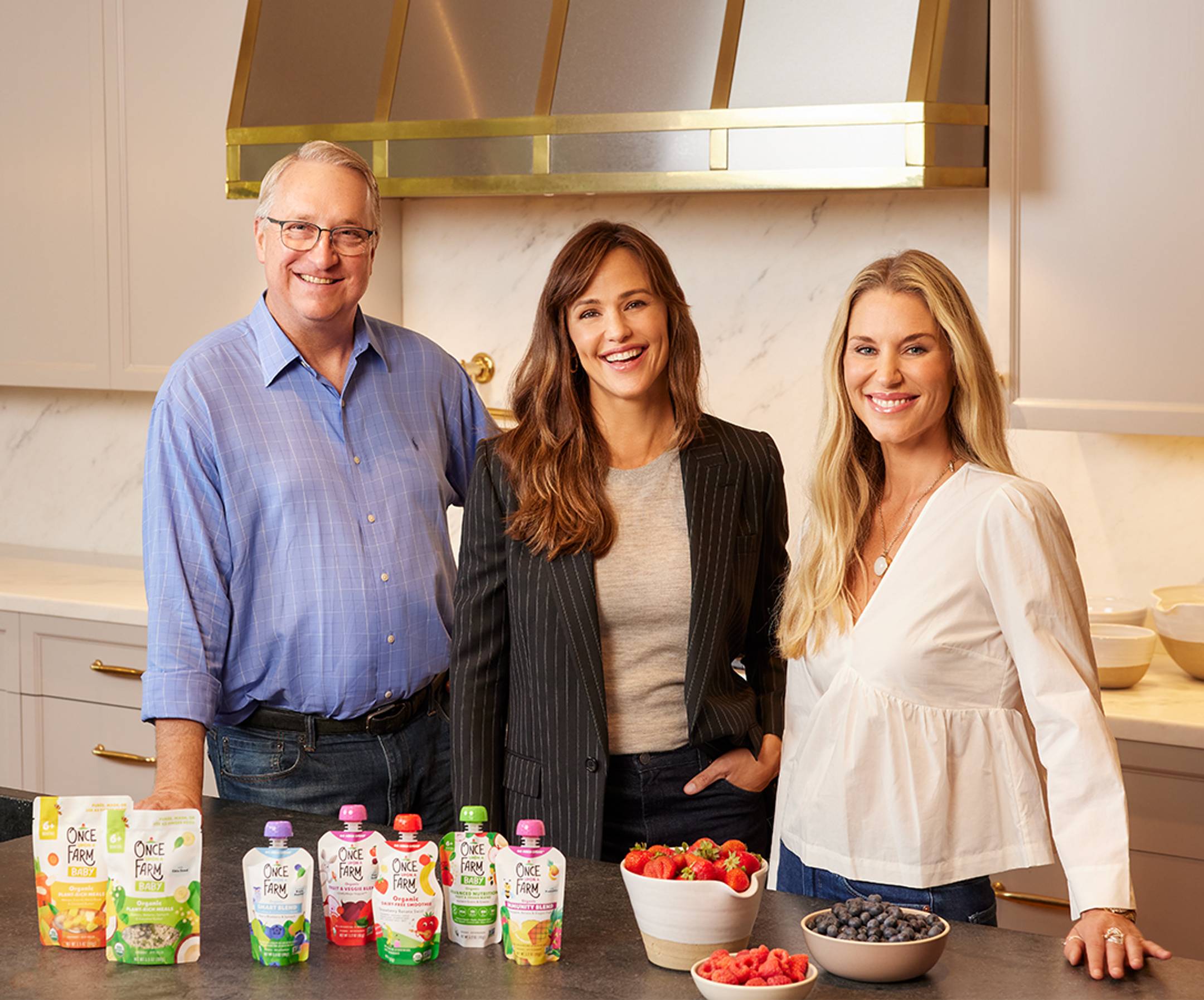
As the baby food industry evolves beyond shelf-stable jars and pouches, Once Upon a Farm is positioning itself at the center of a major shift: fresh, organic, refrigerated nutrition for children. In a recent discussion, co-founders Jennifer Garner and John Foraker outlined the company’s growth story, its IPO ambitions, and the mission-driven philosophy guiding its next chapter.
Why Jennifer Garner Joined Once Upon a Farm
Jennifer Garner’s involvement goes far beyond celebrity endorsement. She explained that her decision to co-found Once Upon a Farm was rooted in a simple but urgent gap in the market: the lack of organic, fresh food options for babies. As a parent, she saw firsthand how early nutrition shapes lifelong health—and believed babies deserved the same quality of food adults increasingly expect for themselves.
That belief became the foundation of the brand: food that is cold-pressed, refrigerated, and made from whole, organic ingredients—without preservatives or shortcuts.
A Bigger, More Mature Growth Curve
For John Foraker, Once Upon a Farm represents a new scale of opportunity compared with his previous success at Annie’s. He noted that Once Upon a Farm has reached a larger size more quickly and is operating from a stronger, more mature position at a similar stage of growth.
This maturity is one reason the company feels confident discussing an IPO. The business has moved beyond niche status and into a phase where national distribution, operational resilience, and category expansion are realistic—and necessary—next steps.
Clean Ingredients, Real Taste, Real Nutrition
At the heart of Once Upon a Farm’s strategy is a strict product philosophy:
- Clean, whole, organic ingredients
- Fresh, refrigerated formats that preserve nutrients
- Flavors designed to actually taste good
- Nutrition that is developmentally appropriate for children
The founders emphasized that baby food should not be treated as a compromise between health and taste. Their goal is to raise the bar for what “kids’ food” can be—starting from infancy.
Expanding Distribution and Creating a New Category
One of the company’s most ambitious plans is to rethink how baby food is sold in stores. Once Upon a Farm is pushing to place refrigerated coolers directly in baby aisles, making fresh food as visible and accessible as traditional shelf-stable options.
Beyond baby food, the brand is also exploring adjacent categories, including lunchbox-friendly items, allowing it to grow with families as children age.
Premium Nutrition, Broad Accessibility
While Once Upon a Farm operates in the premium nutrition space, affordability remains a core focus. The company uses price-pack architecture to reach a wide range of consumers—and that strategy is working.
According to the founders, a significant portion of their customers come from households earning under $40,000 per year. This broad income mix reinforces the company’s belief that better childhood nutrition should not be limited to affluent families.
Navigating Tariffs and Supply Chain Risk
Supply chain resilience is another pillar of the company’s growth strategy. Foraker explained that Once Upon a Farm sources ingredients from multiple regions around the world, reducing exposure to tariffs, climate risks, and geopolitical disruptions.
This diversified sourcing model helps protect both pricing stability and long-term product availability—critical factors as the company scales.
A Family Farm With a Bigger Mission
The company’s mission is also deeply personal. Garner shared that her uncle and aunt grow organic produce that supports local food banks, reinforcing Once Upon a Farm’s broader goal: driving systemic change in childhood nutrition, not just selling products.
This blend of personal values and corporate strategy is central to the brand’s identity—and a key message to future investors.
Looking Ahead: Growth Rooted in Purpose
As Once Upon a Farm looks toward an IPO, its message is clear. The company intends to grow by staying grounded in its mission: improving how children are fed, reshaping the baby food aisle, and proving that scale and purpose don’t have to be at odds.
In an era where consumers increasingly demand transparency, nutrition, and impact, Once Upon a Farm is betting that fresh food—and a clear mission—can redefine an entire category.