U.S.-Iran tensions escalate as Donald Trump issues a deadline to reopen the Strait of Hormuz. Explore the latest news, global impact, and diplomatic developments in 2026.
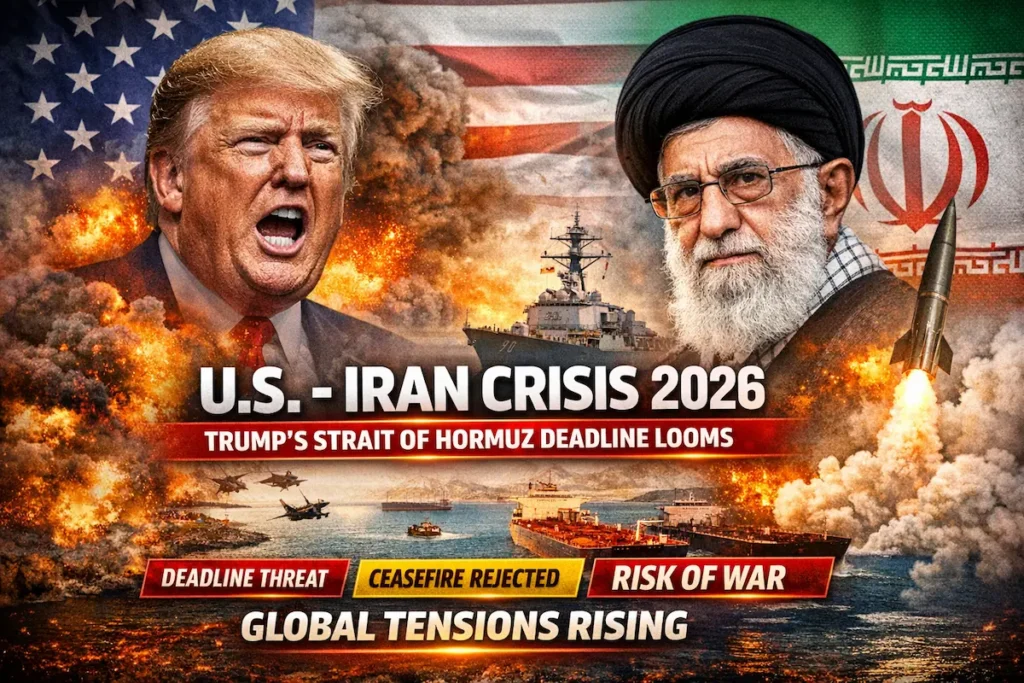
The ongoing conflict between the United States and Iran has reached a critical turning point in 2026. With rising geopolitical tensions, aggressive rhetoric, and stalled diplomatic negotiations, the situation is rapidly gaining global attention.
At the heart of the crisis lies a high-stakes ultimatum issued by Donald Trump, demanding immediate action from Iran—raising fears of potential military escalation.
Trump’s Deadline on the Strait of Hormuz
In a bold and controversial move, Donald Trump has set a strict deadline for Iran to reopen the Strait of Hormuz by Tuesday at 8:00 p.m. ET.
He warned of severe consequences if Iran fails to comply, using strong language that underscores the seriousness of the situation.
Why This Matters:
- The Strait handles nearly 20% of global oil shipments
- Any blockade could trigger a global energy crisis
- It directly impacts international trade and economies
Iran Rejects Ceasefire Deal
Iran has officially rejected the latest ceasefire proposal, signaling a firm stance against what it sees as insufficient guarantees.
Iranian officials have emphasized that:
- A ceasefire alone is not enough
- Long-term security assurances are required
- They want guarantees against future military attacks
This rejection highlights the deep-rooted mistrust between the two nations.
Diplomatic Efforts Through Pakistan
In an attempt to ease tensions, Iran reportedly sent a peace proposal via Pakistan.
However, the U.S. response has been cautious. While acknowledging the proposal as a “significant step,” Donald Trump ultimately dismissed it as “not good enough.”
This indicates that negotiations are ongoing—but far from resolution.
Escalating Threats and Military Signals
The rhetoric between both sides is becoming increasingly aggressive. Reports suggest that Trump has threatened to target Iran’s critical infrastructure, including:
- Power plants
- Bridges
- Strategic facilities
He has also claimed that the U.S. is actively taking strong military action, further raising concerns about a possible escalation into open conflict.
Global Impact of the Crisis
The implications of this conflict extend far beyond the U.S. and Iran.
🌐 Economic Impact:
- Rising oil prices
- Market instability
- Supply chain disruptions
🌏 Geopolitical Impact:
- Increased tensions in the Middle East
- Pressure on global alliances
- Risk of broader military confrontation
🇮🇳 Impact on India:
- Higher fuel prices
- Trade route disruptions
- Inflation concerns
Watch Full Coverage
For a detailed breakdown of the situation, watch the original report below:
👉 https://youtu.be/3CMqOUI-UoE?si=EUHcRkYV0GzDvtPu
What Could Happen Next?
With the deadline approaching, several scenarios are possible:
- Diplomatic Breakthrough – Last-minute agreement avoids conflict
- Economic Sanctions – Increased pressure without military action
- Military Escalation – Direct conflict with global consequences
Conclusion
The 2026 U.S.-Iran crisis marks one of the most tense geopolitical situations in recent years. With high stakes, strong rhetoric, and limited diplomatic progress, the world is watching closely.
Whether this situation leads to resolution or escalation will depend on decisions made in the coming hours and days.