Runners completed the world’s deepest marathon 1,119 meters below ground in Sweden’s Garpenberg Mine, showcasing modern, sustainable mining and extreme human endurance.
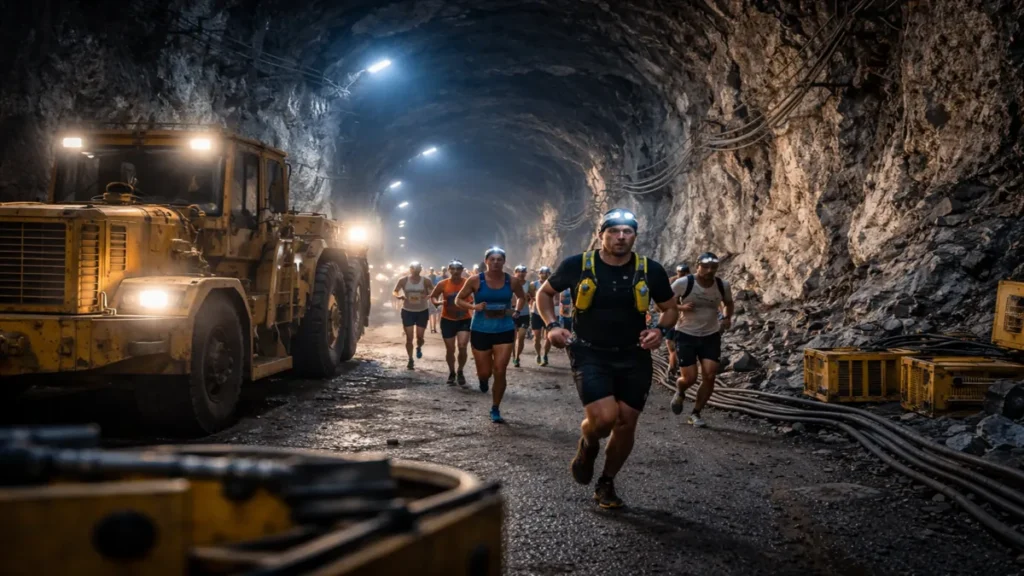
In an extraordinary test of human endurance, runners completed the world’s deepest marathon inside the Garpenberg Mine in Sweden. The race took place an astonishing 1,119 meters below sea level, making it one of the most extreme marathon environments ever attempted.
Organized to challenge physical and mental limits, the event also aimed to highlight how modern mining has evolved into a technologically advanced and sustainable industry.
A Marathon Like No Other
Running 42.2 kilometers is tough anywhere — but doing it deep underground adds an entirely new layer of difficulty.
Participants faced:
- High temperatures between 25–30°C
- Humid air and limited natural ventilation
- Darkness and enclosed tunnels
- Psychological pressure from the depth
To put the depth into perspective, organizers compared it to the height of the Burj Khalifa — the world’s tallest building. Except instead of going up, runners went down.
The race course consisted of 4 km laps, completed 11 times through winding underground tunnels carved into solid rock.
The Vision Behind the Deepest Marathon
The event was conceived by BecomingX, co-founded by adventurer Bear Grylls, with a mission to inspire people to achieve extraordinary goals.
The concept was further supported by:
- International Council on Mining and Metals (ICMM)
- Boliden
Their goal was not just to stage a world record — but to reshape public perception of mining.
For decades, mining has carried negative connotations tied to environmental damage and outdated practices. Organizers wanted to demonstrate what modern, responsible mining actually looks like today.
Why Runners Signed Up
Participants included:
- First-time marathoners eager for a historic challenge
- Experienced endurance athletes
- Mining professionals proud of their industry
For many who work in mining, participating was described as a “no-brainer.” It was a chance to combine professional pride with personal endurance.
Legendary ultramarathon runner Rory Coleman coached the team, helping runners prepare for the physical and mental strain of competing in such a unique environment.
Showcasing Modern, Sustainable Mining
The documentary highlights how far mining has come from its historical image.
Today’s Garpenberg Mine features:
- Advanced automation
- Digital mapping systems
- Remote-controlled operations
- Strong underground connectivity (including Wi-Fi)
Modern mining supplies essential materials used in:
- Smartphones
- Medical devices
- Solar panels
- Electric vehicles
- Quantum computing systems
Without mining, much of today’s technology-driven world would not exist.
The Real Challenge: Mental Endurance
Beyond the heat and humidity, runners described the psychological intensity of racing deep underground. The enclosed environment, lack of natural light, and repetitive tunnel laps created a mental battle as intense as the physical one.
Fear, adrenaline, and determination became constant companions during the race.
Impact and Legacy
By the finish line, the world’s deepest marathon had achieved more than an athletic milestone.
Organizers hope the event becomes a catalyst for changing the narrative around mining — proving that modern mining can be:
- Sustainable
- Responsible
- Technologically advanced
- Essential to global progress
The marathon demonstrated that innovation isn’t limited to sports or technology — it also reshapes industries that power everyday life.
Final Takeaway
The world’s deepest marathon wasn’t just about running 42.2 kilometers underground. It was about pushing boundaries — both human and industrial.
1,119 meters below the surface, runners proved that extraordinary challenges can shine a light on extraordinary progress.