From a single food truck in Los Angeles to a national food brand, Cousins Maine Lobster shows how a simple idea, social media, Shark Tank exposure and franchising can transform a small business into a scalable company.
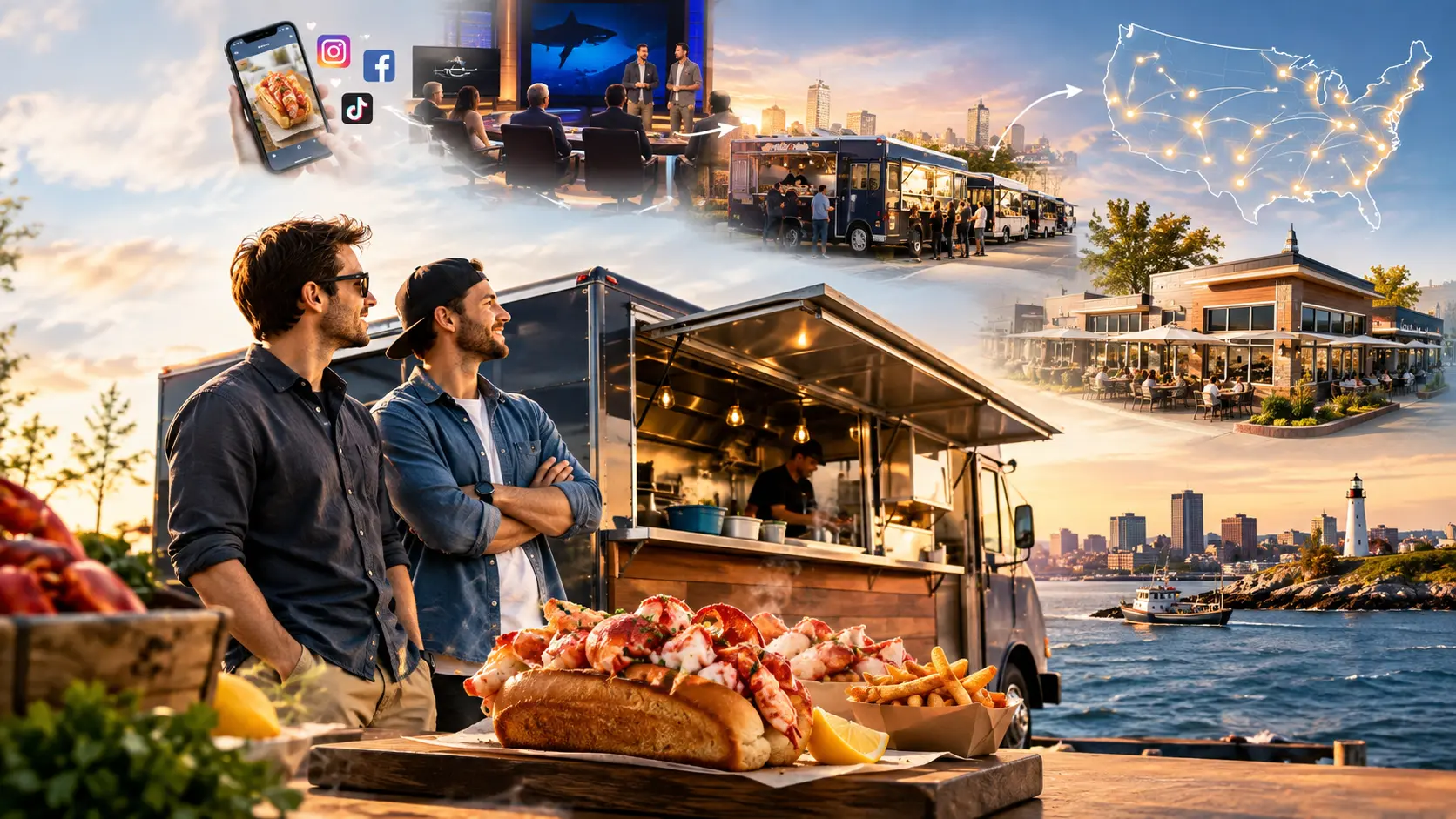
What happens when two cousins with no professional restaurant training decide to build a business around one premium ingredient?
For Sabin Lomac and Jim Tselikis, the answer became Cousins Maine Lobster—a food business that grew from a single food truck into a nationwide brand.
Their entrepreneurial journey offers valuable lessons for anyone interested in starting a food business, building a franchise, using social media for growth, or turning a small local idea into a national company.
The Beginning: One Food Truck and a Simple Idea
Cousins Maine Lobster began in Los Angeles with a straightforward concept: bring authentic Maine lobster to customers through a food truck.
The founders did not have traditional culinary backgrounds or years of experience running restaurants. Instead, they focused on the product itself—high-quality Maine lobster—and built their business around that central idea.
The food truck model also allowed them to enter the market without taking on all the costs associated with opening a traditional restaurant.
That decision would become an important part of their growth story.
How Social Media Helped Create Demand
One of the founders’ early advantages was their use of social media.
Rather than depending exclusively on conventional advertising, they used social platforms to tell customers where their truck would be and encourage people to follow the business.
This created a direct relationship between the brand and its customers.
The strategy also encouraged word-of-mouth marketing. Customers could share their experiences online, helping introduce the business to people who had never encountered it before.
For today’s entrepreneurs, this remains an important lesson: a small business can use social media to build an audience before it has the marketing budget of a major corporation.
The Shark Tank Moment That Changed the Business
A major milestone came when Sabin Lomac and Jim Tselikis appeared on Shark Tank.
The entrepreneurs eventually agreed to sell 15% of the business to Barbara Corcoran for $55,000.
While the investment gave the company additional capital, the founders have described the broader value of the Shark Tank connection as particularly significant.
The exposure from appearing on a nationally recognized television program helped introduce Cousins Maine Lobster to a much larger audience.
The experience also provided access to mentorship and the broader network associated with the Shark Tank brand.
The Bigger Lesson From Shark Tank
For entrepreneurs, the story highlights an important distinction:
An investor can provide more than money.
Capital can help a business purchase equipment, hire employees or fund expansion. But the right strategic relationship can potentially bring experience, connections, credibility and publicity as well.
Why the Food Truck Model Was So Important
The food truck was not simply the place where Cousins Maine Lobster sold lobster.
It was also a scalable business concept.
Compared with opening multiple traditional restaurants, mobile food units can offer greater flexibility in entering new markets.
The founders could take their product directly to customers while learning about demand, operations and locations.
Over time, the concept expanded dramatically.
According to the founders’ interview, the company grew to approximately 100 locations across 38 states, with average unit volumes discussed at around $1.3 million.
The story demonstrates how a relatively small operating format can become the foundation for a much larger business system.
From Food Truck to Franchise Business
As the brand grew, franchising became a major part of its expansion strategy.
Instead of personally operating every location, the company could work with franchise partners who would operate businesses under the Cousins Maine Lobster brand.
This approach can allow a company to expand into multiple markets while distributing some of the operational responsibilities among franchise owners.
But franchising also introduces a major challenge:
How do you keep the customer experience consistent?
A growing food brand needs systems for:
- Product preparation
- Ingredient sourcing
- Employee training
- Customer service
- Brand presentation
- Quality control
- Franchise operations
The larger the company becomes, the more important these systems become.
The Hidden Challenge: Lobster Price Volatility
Running a seafood business comes with a unique challenge—ingredient prices can change.
For Cousins Maine Lobster, fluctuations in lobster prices created pressure on margins and required the founders to think carefully about pricing and operations.
This is a broader lesson for food entrepreneurs.
If your business depends heavily on one major raw material, changes in supplier costs can directly affect profitability.
Successful businesses therefore need to consider:
- Supplier relationships
- Purchasing strategies
- Pricing
- Portion control
- Inventory management
- Profit margins
A great product alone is not enough. The economics of the business have to work as well.
Building Long-Term Business Value
The founders also discussed an aspect of entrepreneurship that is often overlooked: building a company can require sacrificing short-term personal income.
In the early stages, business owners frequently have to reinvest money into the company.
Instead of taking every available rupee or dollar as personal profit, entrepreneurs may choose to invest in:
- Marketing
- Equipment
- Employees
- Inventory
- New locations
- Technology
- Business systems
This can be difficult because the founder may see little immediate financial reward.
But the objective can be to create a stronger and more valuable company over time.
Why Authenticity Became Part of the Brand
Cousins Maine Lobster also built its identity around authenticity.
Maine lobster wasn’t simply an ingredient. It was central to the company’s story.
That matters because consumers increasingly connect with brands through stories.
A successful food brand needs to communicate more than what it sells.
It needs to communicate why it exists and what makes it different.
For Cousins Maine Lobster, the combination of the founders’ story, Maine lobster and the food-truck experience helped create a recognizable identity.
What Entrepreneurs Can Learn From Cousins Maine Lobster
The company’s journey contains several lessons that can be applied to almost any small business.
1. You Don’t Have to Start Big
The founders began with a single food truck.
Entrepreneurs often focus on how much money they need to build a huge company. A better starting question can be:
What is the smallest version of my idea that I can launch and test?
Starting smaller can allow entrepreneurs to learn before committing significant capital.
2. Find a Product People Remember
Lobster gave Cousins Maine Lobster a distinctive identity.
A crowded market becomes easier to navigate when customers can quickly understand what makes your product different.
3. Build an Audience Early
Social media helped the company communicate directly with customers.
Today’s entrepreneurs can use content to build an audience even before their business reaches significant scale.
4. Look Beyond Traditional Investors
The Shark Tank deal demonstrates that strategic value can extend beyond the investment cheque.
When evaluating potential investors, entrepreneurs can also consider experience, network, mentorship and exposure.
5. Build Systems Before You Scale
Growth can expose weaknesses.
If everything depends on the founder, opening additional locations can become extremely difficult.
Documented processes and consistent training can help turn a founder-led operation into a scalable business.
6. Protect Your Product Quality
Expansion creates pressure to reduce costs.
But for a premium food brand, compromising the product can damage the very reason customers chose the company in the first place.
7. Think About the Long Game
Building a national brand is rarely an overnight process.
The Cousins Maine Lobster story shows the importance of patience, reinvestment and long-term thinking.
What’s Next for Cousins Maine Lobster?
The founders have discussed additional opportunities for the brand, including international expansion and grocery-store distribution.
Moving into grocery stores could create an entirely different channel for reaching consumers.
Instead of customers finding a food truck or visiting a location, packaged products could potentially bring the brand directly into consumers’ homes.
That represents an interesting evolution for a company that originally started with a mobile food truck.
The Bigger Business Lesson
The Cousins Maine Lobster story isn’t really just about lobster.
It’s about scaling a simple idea.
The founders combined:
A focused product + a flexible business model + social media + national exposure + franchising + brand consistency
That combination helped transform a single food truck into a much larger business.
For aspiring entrepreneurs, perhaps the most useful takeaway is that you don’t necessarily need to build a massive company on day one.
You need to identify a product people want, create a way to deliver it profitably, learn from customers and build systems that can eventually support growth.
Final Thoughts
Sabin Lomac and Jim Tselikis started Cousins Maine Lobster with a relatively simple idea and a single food truck.
The business then evolved through social media marketing, Shark Tank exposure, strategic investment, franchising and continued brand development.
Their journey demonstrates that scalability is not necessarily about starting with a huge operation—it can be about designing a small operation that can eventually be repeated.
For anyone considering a food truck, restaurant, franchise or consumer-food startup, the story offers a practical reminder:
Start focused. Prove the idea. Build the brand. Create systems. Then scale.
Frequently Asked Questions
Who are the founders of Cousins Maine Lobster?
Cousins Maine Lobster was founded by cousins Sabin Lomac and Jim Tselikis.
How did Cousins Maine Lobster start?
The company started as a food truck in Los Angeles focused on serving Maine lobster.
What was the Shark Tank deal?
The founders agreed to sell 15% of the company to Barbara Corcoran for $55,000.
How did Shark Tank help Cousins Maine Lobster?
Beyond the investment, the founders have discussed the value of the television exposure, mentorship and broader business association created through Shark Tank.
How did the company scale?
The company used its food-truck concept and later expanded significantly through franchising and a broader operating system.
What challenges did the company face?
Managing lobster-price volatility, maintaining product quality and building systems capable of supporting expansion were among the challenges discussed by the founders.
What can small-business owners learn from Cousins Maine Lobster?
Entrepreneurs can learn about validating an idea, using social media, creating a distinctive brand, finding strategic investors, building repeatable systems and planning for long-term growth.
bdxxx999
September 22, 2026 at 1:02 amThis place has a great vibe and the bonuses for new members are actually generous. I am having a blast so far. Visit bdxxx999 for more details.